AI Assistants Are Becoming the New Digital Shelf for Consumer Discovery
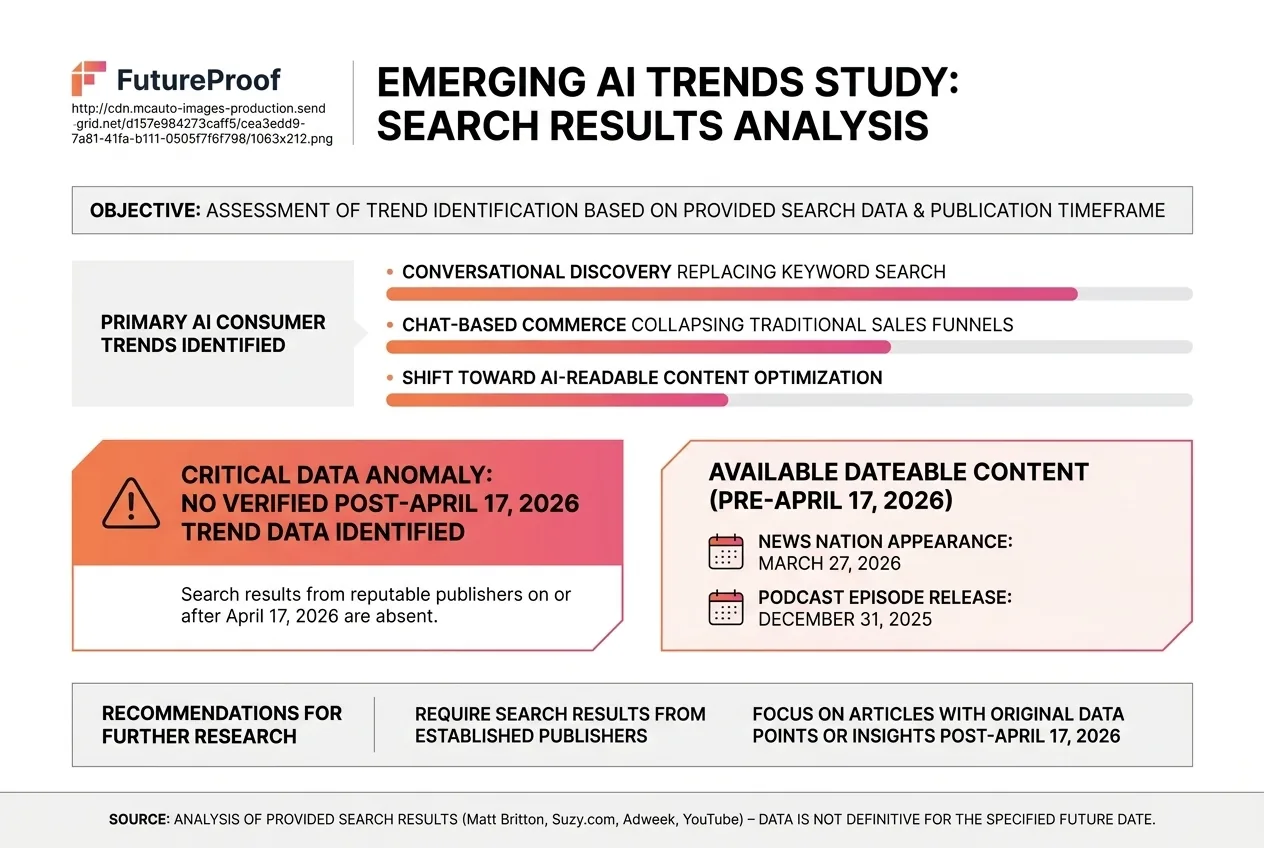
The landscape of consumer discovery is undergoing a seismic transformation, a shift so profound it redefines the very essence of how brands get found, chosen, and ultimately, succeed. For decades, the digital frontier of commerce was largely dominated by the keyword search bar, a familiar interface where consumers diligently typed their queries, sifting through pages of results to unearth the perfect product or service. Today, that era is rapidly drawing to a close, replaced by the intuitive, intelligent, and increasingly indispensable presence of conversational AI. This isn't merely an evolution; it's a revolution, signaled by compelling new data that demands immediate attention from every marketer and brand strategist.
A groundbreaking Gartner ConsumerTech Update, published on May 6, 2026, reveals a stark and undeniable reality: a staggering 41 percent of US adults now initiate their product research with an AI assistant, rather than a traditional search engine. This figure is not just a statistic; it’s a bellwether, representing a doubling in adoption in less than eighteen months. Such explosive growth is a clear indicator that the consumer journey has irrevocably changed, ushering in an era where demand is created, shaped, and fulfilled through entirely new channels. For forward-thinking brands, this profound shift necessitates a complete overhaul of conventional marketing tactics, pivoting from keyword-centric SEO to strategies optimized for machine readability and natural language interactions. The brands that master the art of positioning AI assistants as their new digital shelf are poised to capture the next wave of consumer attention and dominate the future marketplace.
The rapid ascendancy of conversational AI as the primary gateway for product discovery isn't accidental; it's a direct response to evolving consumer expectations and the inherent limitations of traditional keyword search. Consumers are no longer content with a fragmented information retrieval process; they crave seamless, intelligent, and highly personalized guidance. AI assistants deliver precisely this, offering a confluence of convenience, context-awareness, and natural interaction that conventional search engines simply cannot match. When a user asks an AI assistant, "What's the best noise-canceling headphone for frequent travelers on a budget?" they aren't just getting a list of links; they're engaging in a dialogue that can refine preferences, compare features, and even anticipate unspoken needs based on previous interactions or implied intent. This intelligent interaction transforms the discovery process from a chore into a collaborative journey, positioning the AI assistant not just as a tool, but as a trusted advisor.
The metaphor of the "digital shelf" takes on new resonance in this context. Historically, a brand's digital shelf presence was determined by its ranking on search engine results pages – the higher the position, the more visible the product. Now, the digital shelf is increasingly embedded within the conversational interface of AI assistants. These assistants curate, recommend, and often directly present product options based on an understanding of natural language queries, user context, and a vast dataset of product information. Being present and discoverable on this "shelf" means structuring your brand's information in a way that AI can readily comprehend, synthesize, and recommend. It's about being the clear, concise, and compelling answer to a consumer’s naturally spoken question, rather than just being one of ten blue links on a page. The brands that embrace this new paradigm are not just adapting; they are actively shaping the future of consumer engagement.
The Gartner ConsumerTech Update's revelation that 41 percent of US adults now begin product research with an AI assistant is far more than a statistic; it's a seismic indicator of a fundamental behavioral shift with monumental implications. The fact that this adoption has doubled in under eighteen months underscores the unprecedented speed at which this transformation is occurring. This isn't a slow, incremental change; it's an acceleration that demands immediate and strategic recalibration from marketers across all sectors. Consider the sheer volume represented by "41 percent of US adults" – tens of millions of potential customers actively bypassing traditional search channels in favor of AI-driven discovery. This means a significant portion of the market is already operating within a new paradigm, and that portion is growing exponentially.
This shift isn't confined to a niche demographic; it spans across age groups and product categories. Whether it's researching a new smartphone, comparing sustainable clothing brands, finding a local service, or even planning a complex travel itinerary, consumers are turning to AI for instant, synthesized, and personalized answers. For retailers, this means products need to be discoverable not just through SKU numbers, but through the natural language queries that describe their utility, benefits, and emotional resonance. For service providers, it means anticipating the conversational ways clients articulate their problems or needs. For brands building long-term relationships, it’s about establishing a digital persona that AI assistants can trust and recommend with confidence. Projecting forward, if the current trajectory holds, it's not unreasonable to envision a scenario where the majority of product research initiates with AI assistants within the next few years. This isn't a distant future; it's the immediate horizon. The implications extend to market share, brand loyalty, and ultimately, survival in an increasingly AI-mediated marketplace. Brands that fail to acknowledge this exponential growth risk becoming invisible to a rapidly expanding segment of the consumer base.
For marketers, this paradigm shift from keyword search to conversational AI fundamentally redefines the playbook. The tactics that underpinned SEO for decades – meticulous keyword research, density optimization, backlink profiles – while not entirely obsolete, are now secondary to a new imperative: structuring content for machine readability and communicating product value through natural language inputs.
The concept of "machine readability" transcends simple text parsing. It refers to the ability of AI models to not just read, but truly understand the semantic meaning, context, and relationships within your content. This requires a granular approach to content creation, moving beyond broad topics to provide clear, unambiguous information that AI can easily ingest, process, and synthesize. It means anticipating how an AI assistant will break down complex information into digestible answers. This involves:
- Structured Data and Schema Markup: This is the bedrock of machine readability. Implementing comprehensive Schema.org markup (Product, Offer, Review, FAQ, How-To, Article, etc.) provides AI assistants with explicit context about your content. It tells the machine, "This is a product, here's its price, here are its features, and here are common questions about it." Without this digital DNA, your content remains a series of words, rather than a structured dataset that AI can readily leverage.
- Semantic Content Architecture: Rather than focusing on individual keywords, think about entities and their relationships. Build content around topics, sub-topics, and a network of related concepts. Use clear headings, subheadings, bullet points, and numbered lists to create a logical hierarchy that AI can easily map and understand. FAQs sections are no longer just for customer support; they are critical content assets designed to directly answer specific, conversational queries that an AI assistant might encounter.
- Conciseness and Clarity: AI assistants excel at extracting direct answers. Avoid overly complex sentences, jargon, and ambiguous language where possible. Get straight to the point, providing concise, factual information that directly addresses potential user queries. This doesn't mean sacrificing depth, but rather presenting information in an atomic, easily digestible format that can be recomposed by an AI.
- Knowledge Graphs: Contributing to and leveraging knowledge graphs, whether Google's own or domain-specific ones, ensures that your brand and its offerings are part of the interconnected web of facts that AI models draw upon. Establishing your brand as an authority on specific topics or products within these graphs is crucial for discoverability.
Simultaneously, the power of "natural language inputs" necessitates a complete reorientation of how product value is communicated. Consumers aren't typing "best laptop price i7 16GB RAM SSD." They're asking, "I need a fast laptop for video editing that won't break the bank," or "What's a good laptop for a student who needs to run demanding software?" These are rich, nuanced queries that demand a conversational response. To meet this challenge, marketers must:
- Anticipate Conversational Queries: Develop a deep understanding of how your target audience speaks, not just types. Conduct extensive research into common questions, problems, and desires expressed in natural language. Use tools that analyze voice search data, forum discussions, and customer service transcripts to uncover these linguistic patterns.
- Craft Conversational Product Descriptions: Move beyond bulleted feature lists to descriptions that speak directly to the user's needs and pain points in a conversational tone. Frame benefits in terms of solutions and experiences. For example, instead of "24-hour battery life," consider "Power through your busiest days without ever reaching for a charger."
- Focus on the "Why," Not Just the "What": AI assistants are increasingly adept at discerning user intent behind a query. They understand that a user asking about a "comfortable chair" might actually be expressing a need for "relief from back pain during long work hours." Your content must bridge this gap, articulating not just what your product is, but why it matters to the consumer and how it solves their specific problems or fulfills their aspirations.
- Leverage User-Generated Content: Customer reviews, testimonials, and Q&A sections are invaluable sources of natural language. They not only provide social proof but also offer authentic, conversational expressions of product value and user experience that AI models can learn from and recommend. Integrating and highlighting this content effectively becomes a critical component of your natural language strategy.
The brands that grasp these twin pillars – machine readability and natural language optimization – will be the ones that thrive in the AI-driven discovery landscape, transforming their content from static information into dynamic, AI-ready assets.
Building an AI-optimized brand is not a singular task but a continuous strategic imperative that encompasses several key areas. The journey requires a proactive and adaptive approach, treating AI assistants not just as new channels, but as sophisticated gatekeepers to consumer attention.
1. Embrace Semantic SEO & Knowledge Graphs: Traditional SEO focused on keywords; semantic SEO focuses on meaning and relationships. AI thrives on understanding context. Brands must shift their content strategy to build out comprehensive topical authority around their products and industry. This means creating deep, interconnected content that covers not just specific keywords, but the broader semantic network of related concepts. Actively seek to have your brand's core information, products, and services represented accurately in knowledge graphs. This involves consistent branding, factual accuracy, and clear differentiation in all digital assets, allowing AI to confidently map your offerings within its vast knowledge base.
2. Develop a Conversational Content Strategy: This goes beyond simply answering FAQs. It involves mapping the entire customer journey through a conversational lens. How would a customer ask about each stage: awareness, consideration, decision? Develop content personas for your AI interactions, anticipating the tone, complexity, and specific questions at each touchpoint. Create content formats specifically designed for voice search – concise, direct answers that can be easily spoken aloud. This might include short, actionable how-to guides, comparison tables optimized for verbal output, and product descriptions that flow naturally in a spoken dialogue.
3. Leverage Structured Data & Schema Markup Extensively: This is non-negotiable. Structured data is the language AI assistants use to understand your content. For e-commerce, this means robust Product Schema, detailing price, availability, reviews, dimensions, and specifications. For informational content, it's FAQ Schema, How-To Schema, Article Schema, and more. Ensure every piece of content has the most relevant and accurate Schema.org markup possible. Regularly audit your structured data implementation to ensure it's free of errors and is comprehensively applied across your entire digital footprint. This meticulous approach ensures that AI assistants can accurately extract and present your brand's critical information.
4. Focus on Context and Personalization: AI assistants excel at understanding user context – their location, past preferences, stated intent, and even implied needs. Your content strategy should aim to provide rich context that allows AI to make highly personalized recommendations. This could involve creating content segments that address specific demographics, use cases, or problem sets. For example, instead of a generic product page, offer tailored content addressing "noise-canceling headphones for remote workers" versus "for gym enthusiasts." The more nuanced your content, the better an AI assistant can match it to a user's precise, contextualized query.
5. Optimize for Voice and Multimodal Search: The rise of AI assistants means a surge in voice interactions. Content needs to be audible and easily digestible when read aloud. This implies using clear, natural language; avoiding complex sentence structures; and ensuring key information is stated upfront. Furthermore, consider multimodal interactions, where users might combine voice with visual cues (e.g., "Show me red running shoes under $100"). Brands should prepare content that integrates seamlessly across different modalities, ensuring product images, videos, and specifications are also AI-ready and linked contextually.
6. Monitor, Analyze, and Adapt Continuously: The AI landscape is dynamic. New models, capabilities, and user behaviors emerge constantly. Marketers must adopt a mindset of continuous learning and adaptation. Regularly analyze AI assistant responses related to your brand and competitors. Are they accurately representing your products? Are they recommending competitors for queries you should own? Use tools that provide insights into how AI assistants are processing and presenting information. Experiment with different content structures and conversational prompts. The brands that maintain agility and iterate based on real-world AI interactions will be best positioned for long-term success. This continuous feedback loop is crucial for staying ahead in a rapidly evolving digital ecosystem.
The competitive advantage in this new era of consumer discovery belongs unequivocally to the brands that proactively embrace AI assistants as their new digital shelf. The Gartner report's striking statistic – 41 percent of US adults initiating product research with AI, a number that has doubled in less than eighteen months – is a clarion call. Brands that delay this strategic pivot risk far more than missed opportunities; they risk becoming increasingly invisible to a growing segment of their target audience.
The early adopters will not only gain significant market share but will also cultivate a deeper level of trust and authority within the AI-mediated discovery process. When an AI assistant consistently recommends a particular brand because its content is perfectly structured, semantically rich, and directly answers natural language queries, that brand earns a powerful endorsement. This isn't just about search rankings; it's about becoming the default answer in a personalized, conversational interaction. Such a position is invaluable, building long-term brand equity and customer loyalty that transcends fleeting trends.
Conversely, the cost of inaction is substantial. Brands that cling to outdated SEO tactics and fail to adapt their content for machine readability and natural language inputs will find their products and services increasingly overlooked. They will become digital ghosts, their offerings obscured in a landscape where AI acts as the primary curator and guide. In an environment where consumers expect instant, intelligent, and context-aware recommendations, brands that cannot be easily understood and presented by AI assistants will simply not be found. This isn't just about staying relevant; it's about ensuring your brand has a voice and a presence in the future of commerce.
The shift is undeniable, the pace is accelerating, and the imperative for change is immediate. The future of consumer attention is conversational, and the brands that treat AI assistants as their most critical digital storefront will lead the charge, shaping the next chapter of brand discovery and engagement.
The transformation in consumer discovery is not a speculative future but a present reality, underscored by the compelling data from the May 2026 Gartner ConsumerTech Update. The monumental statistic—41 percent of US adults now beginning their product research with an AI assistant, a figure that has doubled in under eighteen months—serves as an unmistakable signal: the era of keyword-centric search is rapidly ceding ground to the intelligent, intuitive power of conversational AI. This isn't a minor tweak to the marketing playbook; it's a fundamental rewrite.
For marketers and brand strategists, the message is clear and urgent. The new digital shelf is conversational, powered by AI assistants that understand natural language, interpret intent, and deliver highly personalized recommendations. To thrive in this evolving landscape, brands must proactively restructure their content for machine readability, ensuring that product value and brand messaging are communicated through semantic structures and natural language inputs. This means a strategic pivot towards comprehensive Schema markup, rich semantic content, a deep understanding of conversational queries, and an unwavering focus on clarity and context.
The brands that grasp this paradigm shift, recognizing AI assistants not merely as tools but as critical gatekeepers to consumer attention, are the ones poised for unprecedented success. They will not only gain a competitive edge but also forge deeper, more relevant connections with a new generation of consumers. The time for deliberation is over. The time to embrace, adapt, and innovate within the AI-driven discovery ecosystem is now. The future of brand visibility and consumer engagement depends on it.