The Rise of AI Agents and the Collapse of the Traditional E Commerce Funnel
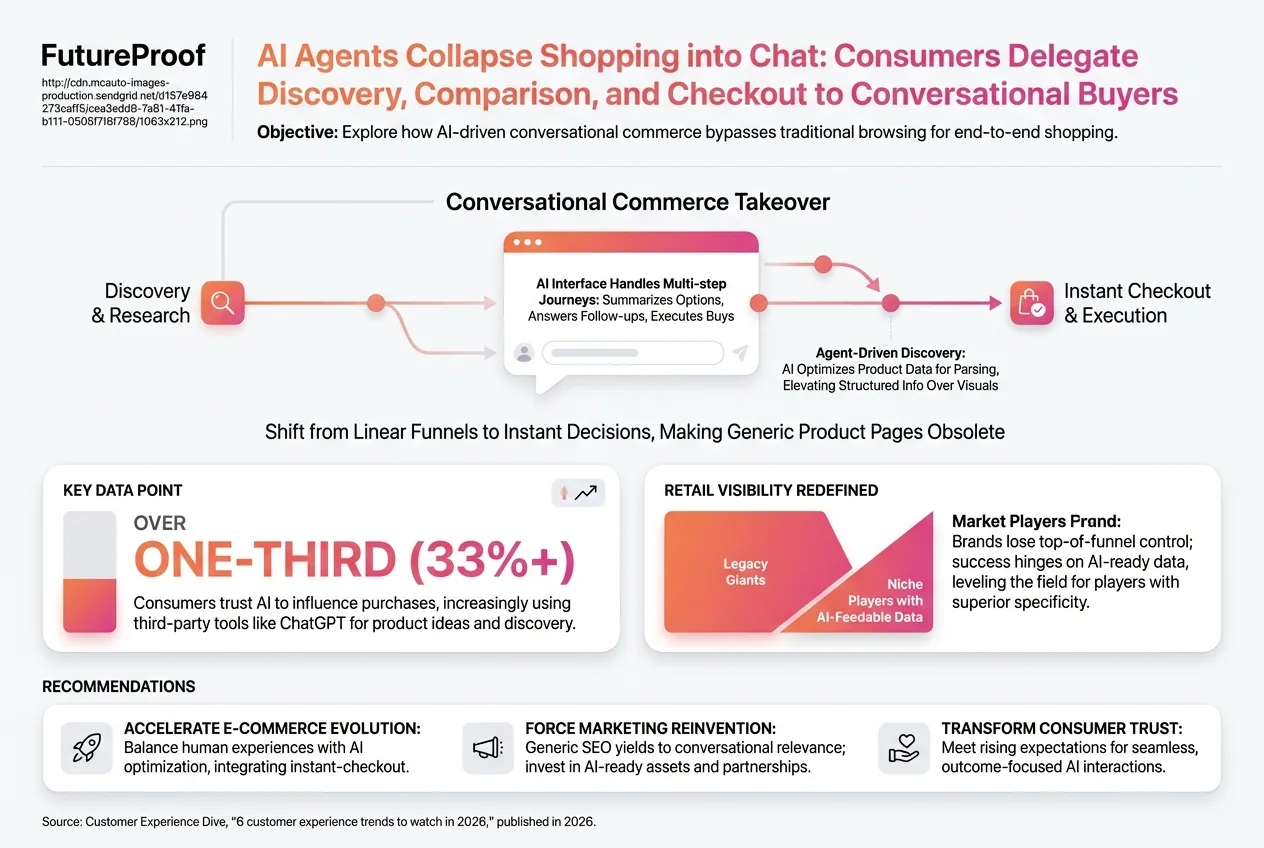
The landscape of retail is undergoing a revolutionary transformation, driven by the relentless advancement of artificial intelligence. What was once a meandering journey through multiple touchpoints, countless product pages, and intricate decision trees, is rapidly collapsing into a singular, conversational interface. AI agents, from sophisticated large language models like ChatGPT to brand-specific conversational buyers such as Walmart’s Sparky, are not merely assisting in the shopping process; they are becoming the shopping process. Consumers are no longer passively browsing; they are actively delegating the entirety of their purchasing journey – from initial discovery and meticulous comparison to precise refinement and final checkout – to these intelligent digital assistants. This fundamental shift renders the traditional product page a less critical linchpin in the sales cycle, elevating the importance of precise, structured, and inherently AI-readable content as the new cornerstone of e-commerce success.
This paradigm shift fundamentally reconfigures the e-commerce funnel, transmogrifying linear, multi-step processes into instant, conversational decisions. Imagine a customer seeking a new ergonomic office chair. Instead of sifting through dozens of brands, features, and reviews across various websites, they simply articulate their needs to an AI agent: "Find me an ergonomic office chair suitable for someone 6'2", with lumbar support, a mesh back, and under $400, available for delivery next week." The AI doesn't just return links; it summarizes optimal options, fields follow-up questions about warranty or specific materials, and executes the purchase, all within a single, seamless dialogue. Brands that can provide their product data in a format that is not just descriptive for humans but also immediately intelligible, specific, and contextual for AI models are the ones poised to dominate this new era. This isn't just about SEO for search engines; it’s about optimizing for conversational intelligence, where the quality and structure of your data become your most potent competitive advantage.
The traditional e-commerce journey, characterized by sequential steps from awareness to conversion, is being rapidly dismantled by the advent of AI-driven conversational commerce. Historically, a customer’s path might involve searching on Google, clicking through to a category page, then a specific product page, reading reviews, comparing specs, perhaps adding to a cart, abandoning it, returning later, and finally completing the purchase. Each step was a distinct opportunity for a brand to capture attention and guide the consumer further down the funnel. Now, AI agents bypass much of this elaborate dance. When a consumer delegates their shopping to ChatGPT, Sparky, or similar platforms, they are entrusting the AI with the entire decision-making and transactional workflow. The AI becomes the personal shopper, the researcher, the product reviewer, and the checkout assistant, all rolled into one. This delegation means that the traditional touchpoints, particularly the standalone product page designed for human consumption, lose their singular authority. While product pages will always serve a purpose for those who prefer deep dives or specific visual inspections, their role in the initial discovery and comparison phase is significantly diminished. The AI, acting on behalf of the consumer, pulls information directly from structured data feeds, semantic web understanding, and contextual product knowledge bases, rather than relying solely on surface-level website content.
The instantaneous nature of AI-driven purchasing decisions is perhaps its most disruptive characteristic. AI doesn't get distracted by endless scrolling or competing banner ads. It processes information with lightning speed, performing complex comparisons and syntheses in fractions of a second. If a consumer asks, "Which noise-cancelling headphones under $250 offer the best battery life and comfort for long flights?", the AI will instantly query vast datasets, rank options based on those specific criteria, and present a curated selection. Further questions like, "What's the warranty on the Sony WH-1000XM5 and how does it compare to Bose QuietComfort Ultra's?", are answered within the same conversational thread, eliminating the need to navigate to separate FAQ sections or manufacturer websites. The AI's ability to seamlessly transition from information retrieval to transaction execution means that conversion opportunities are no longer spread across multiple pages and sessions but are compressed into a single, fluid interaction. This demands an unprecedented level of clarity, accuracy, and completeness in product data, as the AI's recommendations and justifications are only as good as the information it can access and interpret.
The imperative for brands is clear: survive and thrive by adapting to this new landscape where precise, structured, and AI-readable content reigns supreme. But what exactly does "AI-readable content" entail, and how does it differ from traditional SEO or standard product descriptions? It goes far beyond simply listing features. AI-readable content is data-rich, semantically organized, and explicitly tagged in a way that AI models can not only understand but also utilize for comparison, inference, and recommendation. This includes comprehensive schema markup (Product, Offer, AggregateRating, etc.) that clearly defines every aspect of a product. It encompasses granular product attributes – not just "color: blue" but "hue: sky blue, finish: matte, material: anodized aluminum." It involves detailed usage scenarios, compatibility specifications, environmental certifications, and even the emotional benefits articulated in a machine-understandable format. Every potential question a consumer might ask, every comparison point they might consider, must be present in a structured, accessible format within your product data.
This means moving beyond descriptive paragraphs aimed solely at human readers. While engaging prose remains valuable for establishing brand voice and emotional connection, the AI primarily consumes data points. Think of an AI agent as a hyper-efficient data analyst. It doesn't want to read a story about your product; it wants the facts – organized, categorized, and verifiable. This includes explicit declarations of key performance indicators (e.g., "battery life: 30 hours," "weight: 250 grams," "processor: Intel Core i7 13th Gen"), detailed ingredient lists, nutritional information, care instructions, assembly guides, and any other data point that could influence a purchasing decision. Furthermore, content must anticipate natural language queries. If a customer asks, "Is this sweater machine washable?", the AI needs direct access to a "care instructions: machine wash cold, tumble dry low" attribute, not just an image of a laundry tag. AI models excel at pattern recognition and information extraction from structured data, making it critical for brands to meticulously curate and present their product information in this machine-optimized format.
One of the most exciting implications of this shift is the profound leveling of the playing field. In an AI-mediated shopping journey, a brand's visibility and success become less dependent on the sheer scale of their marketing budget or the legacy of their brand name, and more on the richness, accuracy, and structure of their product data. Smaller brands, often unburdened by legacy systems or bureaucratic inertia, possess a unique opportunity to surface above established giants. If a niche artisanal soap maker meticulously details the natural ingredients, ethical sourcing, skin benefits, and sustainable packaging of their products in a format optimized for AI, their offerings can be just as discoverable, if not more so, than those of a multinational conglomerate that has neglected its structured data strategy. The AI, acting as an impartial arbiter, prioritizes relevance and precision. When a consumer asks for "vegan, cruelty-free, lavender-scented soap for sensitive skin," the AI will surface the brand that most accurately and comprehensively fulfills those specific criteria, regardless of its market share. This empowers agile, detail-oriented brands to compete on the merits of their product information, rather than purely on brand recognition or advertising spend. It's a meritocracy of data, where meticulousness can trump market dominance.
To succeed in this new environment, marketing teams must urgently pivot towards building multi-audience content strategies. This involves creating content that simultaneously feeds the hungry algorithms of AI models while still captivating and informing human shoppers. This isn't a dichotomy; it's a synergy. Content designed for AI readability – precise, structured, rich in attributes, and semantically tagged – often inherently improves the user experience for humans too. When information is clear, categorized, and easily digestible by machines, it is often also more navigable and understandable for people. The challenge lies in presentation. Brands must develop robust content architectures that allow for the creation of a single source of truth for product data, which can then be dynamically rendered and presented in various formats: highly structured data feeds for AI, visually appealing product pages for human browsing, comparative tables for quick human analysis, and conversational snippets for AI responses.
This necessitates an API-first approach to content management, where product information is stored in a headless CMS and can be programmatically accessed and utilized by various front-end applications, including AI agents. Natural Language Processing (NLP) friendly content is also crucial; this means using clear, unambiguous language, anticipating common questions, and embedding keywords naturally and contextually. The goal is to ensure that when an AI parses your content, it extracts precise answers to potential user queries without ambiguity. For instance, instead of just stating "Good for gaming," a product description should explicitly list "Optimized for high-fidelity gaming with XYZ GPU and ABC processor, supporting refresh rates up to 144Hz." This level of detail benefits both AI, which can directly match user intent, and human gamers, who appreciate granular specifications. The key is to think about content not as static pages, but as dynamic, interconnected data points that serve multiple endpoints and audiences simultaneously.
Crucially, this transformative shift is being embraced by consumers themselves. A significant and growing segment of the market is actively delegating their purchasing decisions to AI. As highlighted by Customer Experience Dive, a key data point for 2026 reveals that over one third of consumers already trust AI to influence their purchases. This isn't just a theoretical future; it's a present reality where consumers are increasingly turning to third-party tools like ChatGPT for product ideas, discovery, and even direct recommendations. This statistic underscores the urgency for brands to adapt. Consumer trust in AI means that the AI's recommendations carry significant weight, effectively acting as an informed, unbiased (or perceived as such) consultant. If your brand's products are not discoverable, understandable, and optimally presented to these AI agents, you risk being entirely invisible to a rapidly expanding segment of the buying public. This trust also places a tremendous responsibility on brands to ensure the accuracy, transparency, and ethical presentation of their data, as AI-influenced purchases demand a new level of verifiable information.
In conclusion, the future of e-commerce is conversational, instant, and data-driven. AI agents are not just a new channel; they are reshaping the very fabric of the shopping journey, collapsing traditional funnels into single, decisive interactions. Product pages, while still having a role, are ceding their primacy to the underlying data that feeds these intelligent systems. Brands that prioritize the creation of precise, structured, and AI-readable content – replete with granular attributes, semantic markup, and comprehensive information – will be the ones that thrive. This new playing field offers unprecedented opportunities for agile, detail-oriented brands to outmaneuver legacy giants. The imperative is clear: develop multi-audience content strategies that meticulously cater to both the analytical demands of AI models and the nuanced desires of human shoppers. The age of delegated shopping is upon us, and the brands that equip their products with the richest, most accessible, and most contextual data will be the ones to capture the hearts, minds, and wallets of the AI-empowered consumer.