The Rise of Agentic AI and the New Do It For Me Retail Revolution
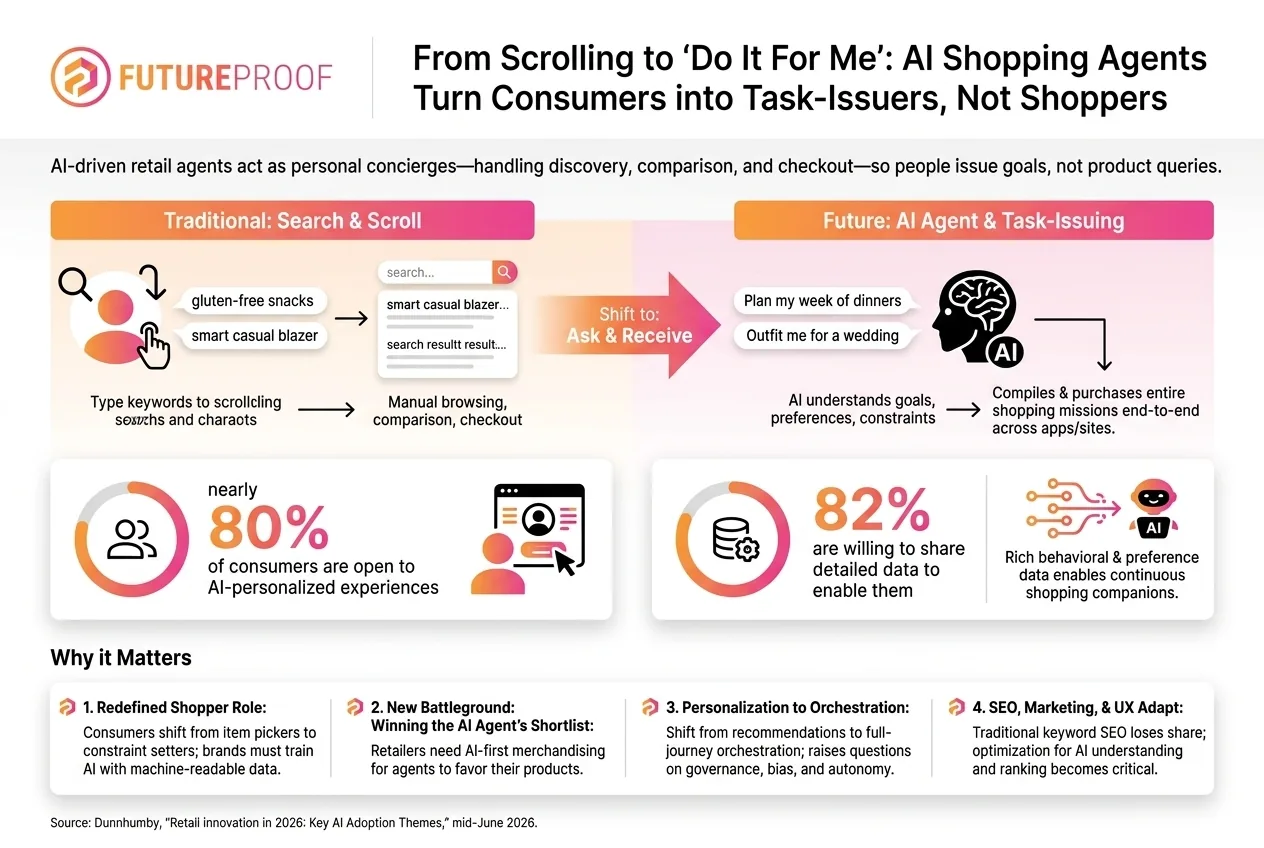
The landscape of consumer commerce is undergoing a profound and irreversible transformation, shifting dramatically from the familiar act of browsing and manual comparison to a sophisticated delegation of shopping missions. We are standing at the precipice of a "Do It For Me" retail revolution, where the traditional "shopper" evolves into a "task issuer," armed with a simple goal and the expectation that intelligent AI agents will orchestrate the entire procurement process. This isn't merely an incremental improvement on existing e-commerce; it's a fundamental redefinition of the relationship between consumers, products, and brands, catalyzed by the rapid maturation of agentic artificial intelligence. The days of endlessly scrolling through product listings, painstakingly comparing specifications, and navigating complex checkout flows are drawing to a close for a growing segment of consumers, replaced by the effortless articulation of a need and the subsequent delivery of a curated solution.
At the heart of this paradigm shift lies the emergence of agentic AI, a sophisticated form of artificial intelligence capable of autonomous decision-making and execution towards a defined objective. Unlike previous iterations of AI in retail, which primarily functioned as recommendation engines or responsive chatbots, agentic AI agents possess the capability to undertake complete, multi-step shopping missions. Imagine articulating a need like "plan my week of healthy, budget-friendly dinners with ingredients available for delivery by Tuesday" or "outfit me for a semi-formal wedding in Tuscany next spring, considering my existing wardrobe and sustainable brands." These are not simple keyword searches; these are complex, multi-faceted requests that demand nuanced understanding, extensive discovery across myriad platforms, intelligent comparison based on a multitude of constraints, and seamless transaction execution. These agents delve beyond simple product attributes, understanding contexts, preferences, values, and even anticipating unspoken needs, making them invaluable personal concierges for a busy modern consumer.
This monumental change empowers consumers to become primarily constraint setters rather than active participants in the discovery and comparison phases. The power dynamic shifts: instead of dedicating their precious time and cognitive energy to hunting for the best deal or the perfect item, consumers now articulate their desires, limitations, and aspirations, handing over the heavy lifting to their AI counterparts. This delegation unlocks immense value for the consumer – reclaiming valuable time, reducing decision fatigue, and often leading to more optimal and personalized outcomes than they might have achieved manually. The convenience factor is immense, streamlining complex purchasing decisions into a few conversational prompts. Crucially, this willingness to delegate is accompanied by an unprecedented openness to sharing personal data, as evidenced by Dunnhumby’s compelling findings. Their report, "Retail innovation in 2026: Key AI Adoption Themes," reveals that nearly 80 percent of consumers are open to AI personalized experiences, and a remarkable 82 percent are willing to share detailed data to enable them. This data point underscores a strong consumer readiness for agent-led shopping, recognizing that richer data inputs directly translate to more accurate, relevant, and ultimately satisfying outcomes from their AI assistants. This willingness to exchange data for enhanced utility forms the very foundation upon which these agentic systems will thrive, allowing them to build increasingly sophisticated profiles and deliver hyper-personalized services.
For brands, this evolving consumer behavior presents both an existential challenge and an unparalleled opportunity. The traditional battleground for consumer attention – dominated by prime shelf space, eye-catching advertisements, and top search engine results page (SERP) rankings – is undergoing a radical redefinition. The new frontier is the AI agent’s shortlist. No longer will consumers directly encounter a brand's meticulously crafted ad copy or its strategically optimized product page in the initial discovery phase. Instead, an AI agent will perform that discovery, comparison, and evaluation on their behalf, presenting a curated selection that meets the consumer's specified constraints. Winning a spot on this shortlist is the new imperative, a high-stakes game where visibility is mediated by an algorithmic gatekeeper. Brands must now consider what makes them "agent-preferred." This means going beyond mere availability or competitive pricing; it involves optimizing for factors an AI can discern and value: consistent quality, robust customer reviews, ethical sourcing, transparent sustainability practices, detailed product specifications, exceptional post-purchase support, and a clear, well-articulated value proposition that resonates with diverse consumer needs. Brand trust, reputation, and the seamless integration of detailed, verifiable information across all digital touchpoints will become paramount, as agents will pull from a vast array of data points to inform their recommendations.
The implications for SEO and digital marketing are nothing short of revolutionary, demanding a fundamental rethink of established strategies. The era of keyword stuffing and generic search intent optimization is rapidly giving way to a more sophisticated, semantic understanding of information. Brands must pivot from optimizing for explicit search queries to optimizing for comprehensive entity understanding. This means ensuring that their products, services, and brand identity are richly described, contextually relevant, and deeply integrated within the broader knowledge graph that AI agents draw upon. It's about being recognized not just for a product, but for the problem that product solves, the values it embodies, and the lifestyle it supports. Detailed product schemas, comprehensive FAQs, rich multimedia content, and robust user-generated content (UGC) will feed the AI's understanding, allowing it to interpret nuanced requests and match them with appropriate brand offerings.
Beyond keywords, structured data becomes an absolute non-negotiable. Implementing Schema.org markup with precision for product details, reviews, pricing, availability, and even specific attributes like materials, certifications, and compatibility is crucial. This provides AI agents with unambiguous, machine-readable information, enabling them to quickly and accurately process constraints and compare offerings. Brands must ensure their data is clean, consistent, and constantly updated across all digital properties.
Reputation management takes on an amplified significance. AI agents will inherently prioritize trusted sources and highly-rated products. Authentic customer reviews, high ratings, transparent return policies, and responsive customer service will heavily influence an agent's decision-making process. Brands need to actively cultivate and monitor their online reputation, understanding that every piece of feedback contributes to their algorithmic "trust score." Ethical business practices, sustainability efforts, and social responsibility will not just be marketing buzzwords; they will be quantifiable signals that AI agents can use to align with consumer values.
Personalization at scale becomes a core competency. Brands need to offer flexible product configurations and comprehensive attribute listings that an AI agent can dynamically tailor to an individual's unique profile, preferences, and historical data. This might mean offering products that are easily customizable, or providing detailed ingredient lists and nutritional information for dietary-conscious agents. The more granular and adaptable a brand's product data, the more effectively an AI can integrate it into a personalized solution.
Omnichannel integration is no longer a buzzword but an operational necessity. AI agents will likely pull information from an incredibly diverse array of sources – a brand's website, third-party marketplaces, social media, review sites, and even physical store inventory data. Brands must ensure seamless, consistent data flow across all these touchpoints, creating a unified digital footprint that the AI can confidently rely upon. Discrepancies or gaps in information will hinder an agent's ability to accurately represent a brand, potentially leading to exclusion from the shortlist.
Furthermore, digital marketing must embrace the concept of "explainability" for AI. Brands need to clearly articulate their unique selling propositions (USPs) and value propositions in a way that AI can logically process and present to the end-user. Why should an agent recommend this brand over another? Is it superior quality, better value, faster delivery, or a stronger ethical stance? These factors need to be quantifiable and easily digestible by an intelligent system. The rise of voice interfaces also means an advanced focus on conversational SEO becomes vital. AI agents are inherently designed for natural language interaction, requiring brands to optimize for long-tail, conversational queries and provide clear, concise answers to common questions, anticipating the nuanced ways consumers will articulate their needs to their agents.
Navigating this new era also brings forth significant challenges. Trust and transparency will be paramount. How will consumers trust the agent’s choices, especially when they don't see the full range of options considered? Brands must advocate for mechanisms that allow agents to explain why certain recommendations were made, fostering confidence in the agent's objectivity and the underlying brands. Data privacy and security, despite consumer willingness to share, remain critical considerations. Brands and agent developers must uphold the highest standards to protect sensitive information and maintain consumer trust in the broader ecosystem. There is also the potential for bias in AI; if not carefully designed and trained, agents could inadvertently perpetuate existing market biases or favor certain brands based on skewed data. Overcoming this requires rigorous testing, diverse training datasets, and an ongoing commitment to fairness. A crucial question for brand loyalty also emerges: will consumers develop loyalty to the AI agent itself, or will that loyalty extend to the brands the agent consistently recommends? Brands must continue to build intrinsic value and emotional connections, ensuring they remain desirable even when mediated by an AI. Finally, the "black box" problem poses a significant hurdle: how will brands gain insights into why they were or were not chosen by an AI agent? This necessitates new analytics tools and feedback loops from agent developers to help brands refine their strategies.
Looking ahead, the future landscape promises even greater integration and sophistication. We can anticipate predictive shopping, where AI agents anticipate needs before they are explicitly stated, proactively offering solutions based on learned patterns and external triggers like calendar events or weather changes. Hyper-personalization will permeate every aspect of the retail experience, from product recommendations to post-purchase support. New business models will undoubtedly emerge, potentially centered around agent-to-agent interactions, where personal AI agents negotiate with brand AI agents to secure the best outcomes. Ultimately, the future envisions a symbiotic relationship where humans and AI collaborate in decision-making, with the AI augmenting human capabilities and streamlining the mundane, allowing consumers to focus on what truly matters to them.
In conclusion, the shift from active "shopper" to delegating "task issuer" marks a monumental inflection point in retail. AI shopping agents are not just tools; they are transformative entities that are fundamentally reshaping consumer behavior, brand visibility, and the very fabric of digital commerce. For brands and marketers, this is not a trend to observe but a seismic shift demanding immediate and strategic adaptation. The imperative is clear: embrace agentic AI, understand its operational logic, and proactively optimize for its preferences. This means moving beyond traditional SEO to encompass rich, structured data, impeccable reputation management, granular product information, and a commitment to transparency and ethical practices. The future of retail success hinges on a brand's ability to win the AI agent’s trust and make it easy for these intelligent systems to recommend their offerings. By understanding and adapting to this new reality, brands can ensure they remain relevant, discoverable, and ultimately, indispensable in a world where consumers increasingly ask their AI to "Do It For Me." The journey has begun, and the brands that effectively navigate this new terrain will emerge as leaders in the next era of commerce.