AI Virtual Try On The Future of Immersive and Confident Online Shopping
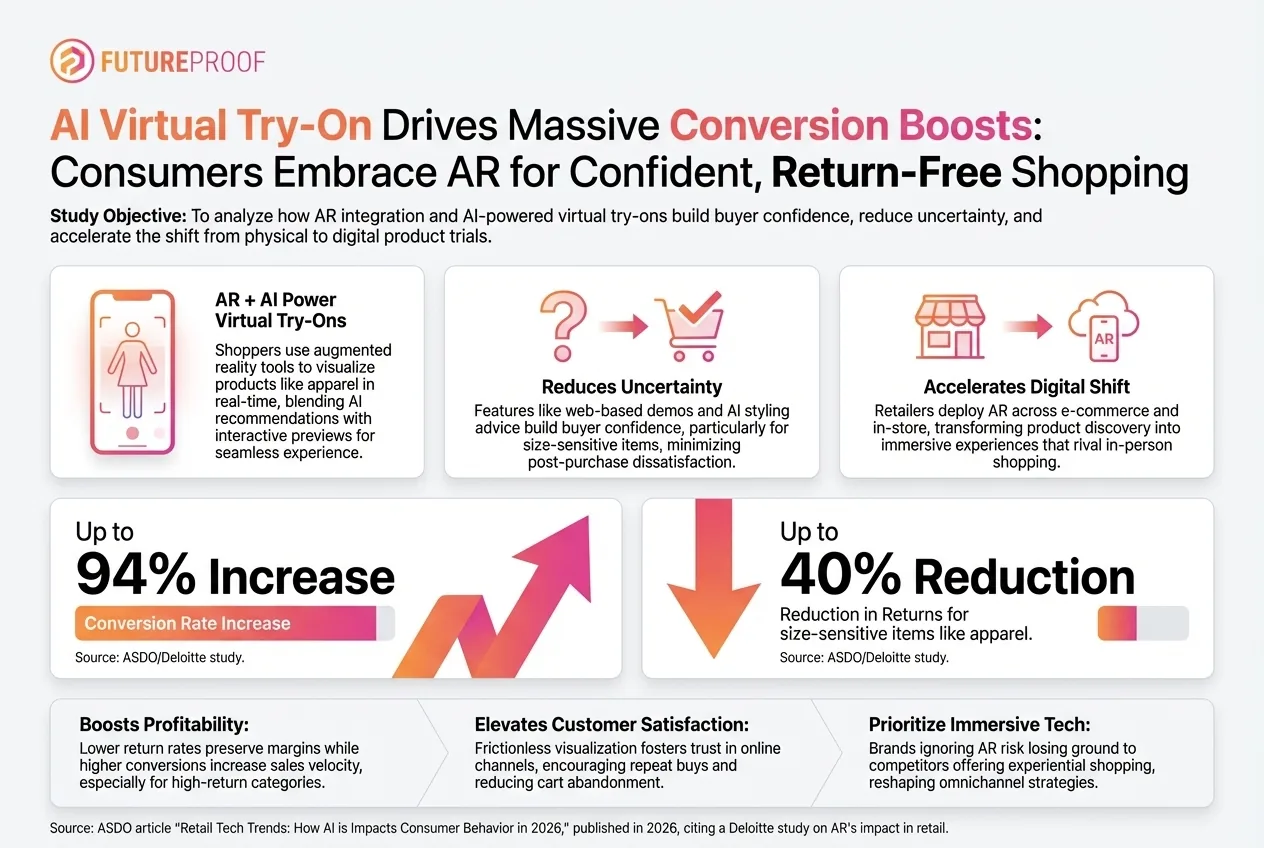
AI virtual try-on tools are rapidly reshaping the landscape of e-commerce, heralding a new era where shoppers can engage with products in ways previously confined to physical stores. This revolutionary technology, powered by the seamless integration of augmented reality (AR) and artificial intelligence (AI), is not just a passing trend but a fundamental shift in how consumers interact with brands online. By enabling real-time visualization and providing AI-driven recommendations, these innovative tools are effectively dismantling the traditional barriers of online shopping, particularly the pervasive uncertainty surrounding size, fit, and appearance. Retailers globally are leveraging this powerful combination to craft digital product experiences that authentically rival, and in some cases even surpass, the tactile and visual insights gained from in-store trials. The result is a more confident, satisfying, and efficient shopping journey for the customer, and a significantly more profitable and sustainable business model for the retailer. As consumer expectations gravitate increasingly towards immersive, personalized, and accurate online experiences, the adoption of AR virtual try-on is no longer an option but a strategic imperative for any brand aspiring to build lasting customer trust, enhance profitability, and maintain a competitive edge in an increasingly experience-driven marketplace.
The traditional e-commerce model, despite its undeniable convenience, has always grappled with a core limitation: the inability to physically interact with a product before purchase. This inherent lack of tangibility often translates into shopper hesitation, particularly for categories where fit, color, material, or how an item looks on the individual are paramount. Apparel, footwear, eyewear, makeup, jewelry, and even furniture are prime examples where a buyer’s confidence hinges on a clear understanding of how the product will integrate into their personal style or living space. Shoppers have long navigated a world of guesswork, relying on static images, generic size charts, and often unreliable customer reviews, leading to a frustrating cycle of purchases, returns, and ultimately, dissatisfaction. This cycle not only erodes customer loyalty but also imposes significant logistical and financial burdens on retailers. The advent of AI virtual try-on directly addresses this pain point by introducing a dynamic, personalized, and highly accurate visualization layer to the online shopping experience. It transforms a passive browsing session into an active, exploratory one, allowing users to "try on" items virtually, see how they fit their unique body shape or how a piece of furniture would look in their actual room, all from the comfort and convenience of their own device. This paradigm shift from speculative browsing to confident visualization is fundamentally redefining what online shopping means for both consumers and businesses.
At its core, an AI virtual try-on tool is a sophisticated blend of augmented reality and artificial intelligence that works in concert to simulate a real-world product interaction. The AR component is responsible for the real-time visualization. Using a smartphone, tablet, or webcam, the user’s environment or their own body is captured, and the digital representation of a product is then accurately overlaid onto that live feed. This isn't just a static image; advanced AR renders 3D models of products with realistic textures, lighting, and movement, allowing users to move around, turn their heads, or walk across a room while the virtual item remains seamlessly integrated into the scene. For apparel, this means seeing how a shirt drapes or how trousers fall. For eyewear, it means seeing how frames complement one's face shape from various angles. The AI element takes this visualization a significant step further, injecting intelligence and personalization into the experience. AI algorithms can analyze a user's body shape and measurements, either through direct input, uploaded photos, or even real-time body scanning via camera. This data enables highly accurate size and fit predictions, going beyond generic charts to recommend the optimal size for a specific individual. Furthermore, AI-driven recommendation engines learn from user preferences, browsing history, and even the virtual try-on sessions themselves to suggest complementary items, alternative styles, or products that align with the user's inferred taste. For instance, after trying on a pair of virtual glasses, the AI might suggest similar styles or recommend a full outfit that complements the chosen frames. This sophisticated interplay of real-time overlay and intelligent recommendations ensures that the virtual experience is not just visually engaging but also functionally useful, guiding the shopper towards the most suitable purchase with unprecedented accuracy. Different applications cater to diverse categories, from AR mirrors in physical stores to mobile app integrations and web-based solutions for virtual makeup application, jewelry fitting, shoe sizing, and even previewing how furniture fits into a home. The underlying technology often relies on complex 3D modeling, advanced rendering engines, and computer vision to achieve this level of photorealism and interactive responsiveness, making the digital product experience remarkably akin to its physical counterpart.
The most compelling argument for retailers to embrace AI virtual try-on lies in its proven ability to deliver significant, measurable gains across key business metrics. The impact on conversion rates, for instance, is nothing short of transformative. As cited in an ASDO article "Retail Tech Trends How AI is Impacts Consumer Behavior in 2026," which references Deloitte, augmented reality can increase conversion rates by an astonishing up to 94%. This dramatic uplift stems from several factors. By eliminating the guesswork associated with online shopping, virtual try-on empowers shoppers to make decisions with far greater confidence. When a customer can visually confirm that an item suits them, fits their style, or complements their space, the psychological barrier to purchase is significantly lowered. The interactive nature of the experience also fosters deeper engagement, turning passive browsing into an active, enjoyable discovery process that naturally leads to more completed sales.
Beyond boosting conversions, AI virtual try-on tools are instrumental in addressing another critical and costly challenge for e-commerce businesses: product returns. The same ASDO article, citing Deloitte, also highlights that AR can reduce returns by as much as 40% for size-sensitive categories like apparel. Returns represent a substantial financial drain for retailers, encompassing not only shipping costs but also restocking fees, processing labor, and potential inventory devaluation. The primary driver for returns in categories like clothing and shoes is often an incorrect size or a product that simply "doesn't look right" in person. By enabling customers to virtually try on items and accurately assess fit and appearance before committing to a purchase, brands can drastically cut down on these preventable returns. This reduction not only translates into direct cost savings but also contributes to greater operational efficiency, less wasted inventory, and a reduced environmental footprint. Furthermore, accurate virtual try-on experiences lead to higher customer satisfaction, minimizing the frustration associated with receiving and returning unsuitable items, thereby strengthening brand loyalty and reducing the need for costly customer service interventions related to fit issues. The tangible financial benefits in terms of increased sales and reduced operational costs make a compelling business case for the widespread adoption of AI virtual try-on technology.
Beyond the immediate financial gains, AI virtual try-on tools fundamentally elevate the overall customer experience, building a foundation of trust and loyalty that is invaluable in today's competitive landscape. By offering an immersive and highly accurate preview of products, brands demonstrate a commitment to transparency and customer satisfaction. This transparency is crucial for strengthening customer trust; when shoppers consistently receive products that align with their virtual try-on experience, their confidence in the brand's online representation grows exponentially. This reliability fosters a deeper connection and encourages repeat purchases. Moreover, the integration of AI allows for unparalleled personalization at scale. Beyond just showing how an item looks, the AI can learn from a user's virtual interactions, preferred styles, body measurements, and even previous purchase history to offer hyper-relevant product recommendations. This transforms the shopping journey from a generic, one-size-fits-all experience into a highly curated and individualized one, mirroring the personalized attention one might receive from a skilled personal shopper in a high-end boutique. This level of personalization makes customers feel understood and valued, significantly enhancing their engagement and satisfaction.
The interactive nature of virtual try-on also creates memorable digital product experiences that directly rival, and in many ways surpass, traditional in-store trials. Unlike a changing room with limited lighting and cumbersome physical garments, AR try-on allows users to see items in different environments, experiment with various looks without physical effort, and even share their virtual try-ons with friends for instant feedback. This gamified, social, and highly convenient experience turns shopping into entertainment, driving longer dwell times and deeper emotional engagement with the brand's offerings. For categories like makeup, for instance, trying on dozens of shades and styles virtually, seeing how they adapt to different skin tones and lighting conditions, offers a level of experimentation and convenience that a physical store simply cannot match. This immersive and engaging shopping journey not only enhances satisfaction but also builds a stronger emotional connection between the customer and the brand, fostering loyalty that extends far beyond a single transaction. In an era where experience is king, AI virtual try-on tools are providing retailers with the means to deliver consistently superior, personalized, and trustworthy interactions that leave a lasting positive impression.
In an increasingly dynamic and competitive retail environment, the strategic adoption of AI virtual try-on tools offers brands a distinct advantage, allowing them to not only keep pace but also to lead the charge in an experience-driven market. First and foremost, it serves as a powerful competitive differentiator. As consumers become more accustomed to and expect immersive online shopping experiences, retailers who prioritize AR are positioning themselves as innovators and customer-centric leaders. This forward-thinking approach can attract new demographics, particularly tech-savvy younger generations who are accustomed to augmented reality in other aspects of their digital lives. By offering cutting-edge technology that enhances convenience and reduces purchasing friction, brands can stand out from competitors still relying on traditional, static e-commerce models. Furthermore, investing in AI virtual try-on is a crucial step towards future-proofing retail operations. The shift towards digital-first and hybrid shopping models is irreversible, and technologies that bridge the gap between physical and virtual realms will become standard. Early adopters are not just responding to current consumer expectations but are actively shaping the future of retail, establishing themselves as pioneers in an evolving landscape.
The implementation of these tools also provides invaluable data and insights. Every virtual try-on session, every product viewed, every recommendation accepted or rejected, generates rich data about consumer preferences, fit requirements, and browsing behavior. AI algorithms can then analyze this data to refine product offerings, optimize inventory management, personalize marketing campaigns, and even inform product development. This continuous feedback loop ensures that the brand remains highly responsive to market demands and individual customer needs. Ultimately, by leveraging AI virtual try-on, retailers are not just selling products; they are selling confidence, convenience, and a superior digital experience. This approach fosters stronger customer loyalty, enhances brand perception, and contributes directly to improved profitability by increasing sales and reducing costs. In a market where customer trust and memorable experiences are paramount, prioritizing AR innovation is not merely about staying competitive; it's about leading the way into the next generation of retail.
Implementing AI virtual try-on, while highly beneficial, requires thoughtful consideration and strategic planning. One of the primary challenges for brands is the creation of high-quality 3D assets for their entire product catalog. Each item needs to be meticulously modeled to ensure realistic textures, accurate dimensions, and proper digital representation, which can be a resource-intensive process. However, the long-term benefits of these assets, which can also be used for other marketing and metaverse applications, often outweigh the initial investment. Integration with existing e-commerce platforms is another key aspect. Brands must choose solutions that offer seamless compatibility and a smooth user experience, whether it's a web-based widget, a mobile app integration, or a physical smart mirror. Partnering with specialized AR/AI technology providers can alleviate much of this technical complexity, offering scalable and customizable solutions. User experience design is paramount; the virtual try-on process must be intuitive, fast, and reliable to encourage adoption and deliver on its promise of convenience. Clear instructions, responsive controls, and realistic rendering are essential. Brands should also plan to measure the return on investment (ROI) by tracking metrics such as conversion rate changes, return rate reductions, average order value, and customer engagement, allowing for continuous optimization. For brands with extensive inventories, a phased approach can be effective, starting with high-return categories or best-selling products to build momentum and gather insights before a wider rollout.
The trajectory of AI virtual try-on tools points towards an even more sophisticated and integrated future for e-commerce. We can anticipate further advancements in AR technology, leading to hyper-realistic rendering, even more precise body scanning and measurement capabilities, and seamless integration across a multitude of devices, from smart glasses to embedded webcams. The convergence with the metaverse is also a significant horizon, where virtual try-on will enable consumers to dress their avatars and seamlessly port those digital garments to real-world purchases, blurring the lines between digital identity and physical consumption. Cross-platform consistency will become crucial, ensuring that a virtual try-on experience initiated on a mobile app can be continued on a desktop, and vice versa. As these technologies mature, virtual try-on will transition from an innovative feature to an expected standard, an indispensable component of any online shopping journey, akin to how product images and descriptions are viewed today. The continuous evolution of AI will further enhance personalization, predicting styles, sizes, and even moods, effectively creating a truly intelligent personal shopping assistant embedded within every retail website. The road ahead for immersive e-commerce is bright, promising an era of unprecedented convenience, engagement, and accuracy for shoppers worldwide.
In conclusion, AI virtual try-on tools represent a pivotal moment in the evolution of e-commerce, offering a powerful antidote to the inherent limitations of online shopping. By merging cutting-edge augmented reality with intelligent AI recommendations, these tools empower shoppers to make confident purchase decisions, thereby significantly increasing conversion rates and drastically reducing product returns. Brands that embrace this technology are not merely adopting a new feature; they are strategically investing in strengthening customer trust, improving their profitability through reduced costs and increased sales, and solidifying their position as leaders in an increasingly experience-driven marketplace. As consumer expectations continue to shift towards more immersive, personalized, and accurate online shopping journeys, the integration of AI virtual try-on is no longer a luxury but a fundamental necessity for any retailer aiming to thrive in the digital age. The future of retail is immersive, intelligent, and deeply personal, and AI virtual try-on is at the forefront of this transformative wave.