The Rise of Personal AI: Apple's Mac mini and Studio Revolutionize Consumer Technology
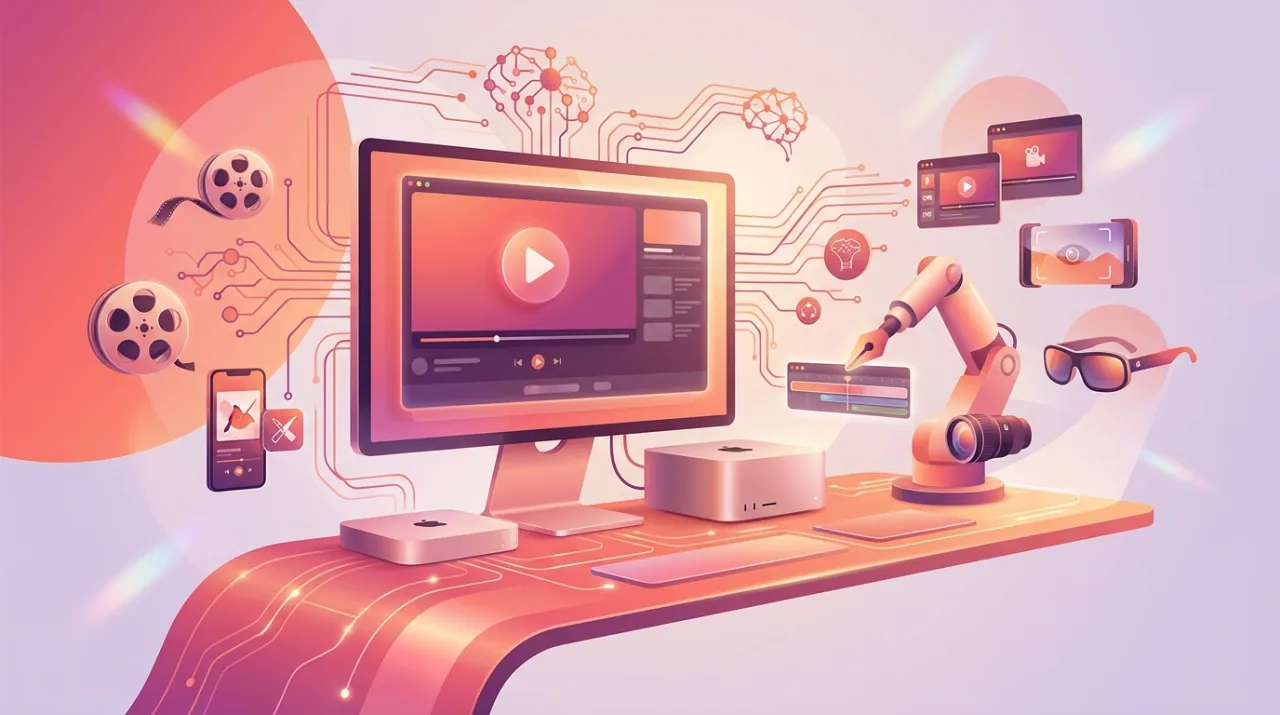
The landscape of artificial intelligence is undergoing a profound transformation, shifting from an era dominated by cloud-centric processing and feature-based integrations to one where personal, autonomous agents are poised to become an integral part of everyday life. This paradigm shift is perhaps best encapsulated by a groundbreaking report from Reuters on August 25, 2026, which revealed Apple’s launch of a more powerful Mac mini and Mac Studio, explicitly positioned as dedicated hardware to host personal AI agents remotely. This announcement, coming from a U.S.-centric source, marks a significant inflection point, signaling the maturation of AI agents from experimental, cloud-only endeavors into a mainstream consumer device category that ordinary users can purchase, own, and utilize for always-on personal agent operations.
For years, artificial intelligence has primarily existed as a utility, either embedded within cloud services providing smart features or as a conversational interface like chatbots. While these iterations have been incredibly useful, they largely operated on a reactive, query-response model, or their "intelligence" was fleeting, residing remotely. The Apple announcement, however, signals a deliberate move towards empowering individuals with their own computational bedrock for AI, transforming the Mac mini and Mac Studio into personal AI agent hosting platforms. This strategic pivot by one of the world’s leading technology companies, particularly in the U.S. market, underscores a burgeoning demand for localized, persistent, and private AI capabilities that can act autonomously on a user's behalf. It represents a bold leap forward, pushing the boundaries of what consumers can expect from their personal computing devices and fundamentally reshaping the dialogue around consumer AI.
Apple's Strategic Pivot: Mac mini and Mac Studio as AI Agent Hosts
The Reuters report of August 25, 2026, details Apple’s unveiling of a new Mac mini, starting at an accessible $899, alongside a significantly beefed-up Mac Studio. Central to these new machines are Apple’s latest M6 or M5 Pro chips, engineered to deliver unparalleled performance. What makes this launch truly remarkable, and a turning point for consumer AI, is Apple’s explicit marketing narrative. For the first time in a major U.S. consumer-device launch, the primary pitch isn't merely about "AI features" integrated into the operating system or applications, but rather about "AI agent hosting as a core use case" for a mass-market desktop computer. This isn't just a minor upgrade; it's a fundamental redefinition of a computer's purpose in the age of intelligent automation.
The Mac mini, long a beloved compact desktop, is now explicitly aimed at consumers who desire to host AI agents remotely. This means providing the infrastructure for an always-running agent directly within their own hardware, rather than being solely dependent on distant cloud infrastructure. This approach offers users greater control, enhanced privacy, and potentially faster, more responsive agent performance. The Mac Studio, with its even more formidable specifications, extends this capability to power users and developers, ensuring that even the most demanding AI agent workloads can be handled locally. This strategic alignment underscores a strong belief within Apple that the future of personal AI lies not just in the cloud, but in a hybrid model where a significant portion of intelligence, especially that pertaining to personal data and persistent tasks, resides on a user’s local machine.
Mainstream Hardware for Personal Agents: Normalizing Local AI Autonomy
One of the most profound implications of Apple's move is the normalization of the idea that individuals will run persistent AI agents that act on their behalf. This isn't a niche concept for tech enthusiasts anymore; it's being woven into the fabric of mainstream consumer technology. Historically, the concept of dedicated home servers or Network Attached Storage (NAS) drives allowed users to centralize data, run private applications, or host media. However, these solutions, while powerful, often remained the domain of technically inclined users due to their complexity and setup requirements.
Apple’s new Mac mini, positioned as an "agent host," takes this concept into a far more mainstream and user-friendly realm. By explicitly marketing a standard consumer machine for this purpose, Apple is signaling that owning a persistent, always-on AI agent will soon be as commonplace as owning a smartphone or a laptop. These personal AI agents are envisioned to manage schedules, filter communications, automate routine tasks, and proactively assist users in ways that are deeply integrated with their digital and physical lives. The shift to local hosting also implicitly addresses growing concerns around data privacy and security, as sensitive personal data processed by these agents can remain on the user's device rather than being constantly transmitted to and stored on remote servers. This empowers users with greater sovereignty over their digital lives and the intelligent entities operating within them.
Performance Targeted at Agent Workloads: The Demand for Local Intelligence
The inclusion of newer, more powerful chips – the M6 or M5 Pro – and the higher starting price for these Mac mini and Mac Studio models are not arbitrary. They are framed by Apple as being directly necessary to handle the intensive computational demands of "AI agent workloads." This distinction is critical. Traditional computing tasks, even complex ones, often involve bursts of activity. AI agent workloads, however, require sustained, often continuous processing power to run complex models, maintain environmental awareness, and execute multi-step workflows.
Consider an always-on personal AI agent that is constantly learning user preferences, monitoring incoming information from various sources (email, social media, news feeds), managing smart home devices, and anticipating user needs. Such an agent might be running large language models (LLMs), vision models, or other specialized AI modules locally. This requires substantial on-device processing power, memory bandwidth, and energy efficiency – precisely what Apple's M-series chips are designed to deliver. The ability to execute these models and workflows privately and locally ensures not only responsiveness but also reduces latency and reliance on internet connectivity. This strategic investment in high-performance local AI hardware implies that Apple foresees a sustained and growing demand for advanced, private execution of complex AI models at a consumer scale, validating the necessity of dedicated hardware for the coming age of pervasive personal AI.
Timing and Symbolic Weight: Tim Cook’s Legacy in the AI Agent Era
The Reuters report highlights a particularly poignant aspect of this launch: it is likely the final product introduction of Tim Cook’s tenure as CEO of Apple. This fact imbues the Mac mini and Mac Studio launch with immense symbolic weight, underscoring Apple's long-term strategic direction. For a leader to conclude a major era by explicitly leaning into the AI-agent hardware narrative for everyday users, rather than limiting AI to supplementary on-device assist features, speaks volumes about the perceived importance and transformative potential of personal AI agents.
This decision signifies that Apple views AI agent hosting as a foundational pillar for its future in consumer technology, much like the iPhone redefined mobile computing. It suggests that Apple, under Cook's leadership, has carefully deliberated the trajectory of AI and concluded that empowering users with their own local AI infrastructure is paramount. This move positions Apple not just as an innovator in silicon or software, but as a pioneer in defining the next major consumer computing category: the personal AI agent host. This legacy decision sets a clear course for Apple's future and provides a powerful endorsement for the entire ecosystem of AI agent development, signaling to developers and consumers alike that this is where the industry is heading.
The Broader Landscape: Software Agents Catch Up – U.S. Consumer AI Development
While Apple’s hardware announcement forms a critical cornerstone, it is important to contextualize this development within the broader evolution of AI agents. The same timeframe as the Apple launch has witnessed a rapid acceleration in the capabilities and availability of software agents, particularly within the U.S. consumer market. These advancements show how AI agents are rapidly evolving beyond simple chat tools, transforming into sophisticated, task-completing, and often always-on consumer services. The synergy between Apple's dedicated hardware and these advanced software agents creates a powerful ecosystem poised to redefine personal computing.
Browser-Native, Task-Completion Agents: Google Gemini in Chrome
A significant development illustrating the increasing sophistication of software agents is the widespread rollout of Google’s Gemini in Chrome to all U.S. Android users. This integration goes far beyond conventional AI assistants that merely answer queries or summarize web pages. With its "auto browse" feature, Gemini in Chrome is now capable of multi-step task completion directly on the web, acting autonomously on behalf of the user.
Examples of these advanced capabilities include booking parking, modifying online orders, or organizing complex travel itineraries. Instead of simply providing information, the agent can navigate websites, fill out forms, interact with multiple online services, and complete a sequence of actions to achieve a user's objective. This transition from "answering page questions" to "performing multi-step tasks" marks a crucial step in agentic behavior. It demonstrates a level of contextual understanding, decision-making, and execution that was previously absent in mass-market AI tools.
However, Google’s implementation also highlights the emerging complexities and monetization strategies around advanced agents. Access to these sophisticated capabilities is typically restricted to adult U.S. users with AI Pro/Ultra subscriptions, underscoring a tiered approach to AI services. Furthermore, the inclusion of daily caps, such as up to 20 or 200 tasks depending on the subscription tier, illustrates the increasing maturity of agent features with usage-based controls. These limitations reflect the computational resources required for such autonomous actions and provide a framework for sustainable service delivery. Gemini in Chrome exemplifies the growing power of browser-native agents, setting a precedent for how intelligent systems will interact with and manipulate the internet on our behalf.
Emerging Dedicated Consumer Agents from Major Platforms: Meta’s Hatch
The competitive landscape for consumer AI agents is rapidly intensifying, with major U.S. platforms actively developing and preparing to launch their own dedicated offerings. Among these, Meta is reportedly preparing to launch "Hatch," described as a consumer AI agent designed "to do your errands." This development signals Meta's intention to enter the proactive personal agent space, likely leveraging its vast ecosystem and integrations.
Meta’s vision for Hatch aligns with the growing demand for an "everyday agent" that can handle routine tasks, streamlining users' digital and potentially physical lives. Given Meta's extensive reach across platforms like Facebook, Instagram, WhatsApp, and its burgeoning presence in VR/AR, Hatch could operate across a wide array of user touchpoints. Imagine an agent that can manage social media interactions, schedule appointments based on calendar data, summarize messages, or even assist in navigating virtual environments. This strategic move by Meta suggests a near-term future where multiple, well-resourced U.S. platforms will each offer their own branded consumer agents, competing to become the primary digital assistant for users. The emphasis on "doing your errands" implies a focus on practical, utility-driven automation that aims to offload cognitive load and save users time. This will inevitably lead to a diverse marketplace of agents, each with unique strengths and integrations, pushing the boundaries of what these digital companions can achieve.
Early Mass-Market Always-On Agent Tiers: Gemini Spark
The evolution of AI agents is not just about capabilities but also about accessibility and sustainability through viable business models. Commentary surrounding tools like "Gemini Spark" illustrates the first significant steps toward offering subscription-based, always-running personal agents at mass-market price points. Initially described as a premium 24/7 cloud agent, Gemini Spark reportedly transitioned from a higher-tier pricing model (around $99.99) to a more affordable "AI Pro" pricing structure.
This shift is crucial for two reasons. Firstly, it democratizes access to "always-on" AI functionality. Previously, maintaining a constantly active, cloud-based agent might have been prohibitively expensive or reserved for enterprise clients. By making it more affordable, companies are signaling that persistent personal AI is ready for broader consumer adoption. Secondly, it establishes a clear monetization path for advanced AI services. The subscription model for Gemini Spark, much like streaming services or cloud storage, suggests that consumers are increasingly willing to pay for continuous, reliable AI assistance. An always-running agent can monitor events, track long-term goals, learn user habits over extended periods, and remain constantly ready to act. This contrasts sharply with transactional, request-based AI interactions, fostering a deeper, more continuous relationship between the user and their digital assistant. The move towards affordable, subscription-based, always-running agents is a critical step in embedding AI into the daily routine of millions of U.S. consumers, preparing the ground for the capabilities that dedicated hardware like the Mac mini will enable.
Agentic Commerce and Shopping Agents: Revolutionizing Retail
Perhaps one of the most tangible and immediate impacts of evolving AI agents can be observed in the realm of commerce. Multiple U.S.-focused reports indicate that AI agents are already being actively utilized by consumers for shopping research and task execution, ushering in what is increasingly being termed "agentic commerce." These agents are transforming how individuals discover, evaluate, and purchase products and services.
Consumers are now leveraging AI agents to perform a variety of shopping-related tasks: comparing brands across different retailers, finding the lowest prices for desired items, identifying where specific products are in stock, and even analyzing product reviews to synthesize key pros and cons. While some surveys suggest that the actual "transaction completion" part of the shopping journey (i.e., making the final purchase or restocking items) is still relatively rare for purely agent-driven processes, the functionality to "close the loop" is undeniably present and increasingly highlighted by developers and platforms.
The implications for retail and e-commerce are profound. Agentic commerce has the potential to fundamentally alter brand loyalty, as agents prioritize objective criteria like price, availability, and user reviews over brand marketing. It could also lead to more efficient and personalized shopping experiences, anticipating needs and making purchases proactively. Furthermore, the role of advertising may shift from direct persuasion to influencing the underlying data and criteria that AI agents use for their recommendations. As these shopping agents become more sophisticated and gain the ability to autonomously complete transactions, they will not only save consumers time and money but also force businesses to adapt to a new paradigm of AI-mediated purchasing, where the agent, not just the human, is a key decision-maker.
The Convergence: Hardware Meets Software for the AI Agent Era
The Apple Mac mini and Mac Studio story, when viewed alongside the rapid advancements in software agents, paints a comprehensive picture of the imminent AI agent era. Apple's strategic pivot to dedicated hardware for hosting personal AI agents is not merely a response to market trends; it’s a validation of the profound capabilities and demands of these software systems. The availability of powerful, consumer-grade local hardware provides the essential infrastructure for the kinds of persistent, multi-step autonomous agents being developed by Google, Meta, and others.
This convergence is critical. Software agents, while intelligent and capable in the cloud, often face limitations related to data privacy, latency, and continuous operation when solely reliant on remote servers. Dedicated local hardware, equipped with M6 or M5 Pro chips, empowers these agents with:
- Enhanced Privacy: Sensitive personal data and models can remain on the user's device, significantly reducing privacy risks associated with cloud-only processing.
- Reduced Latency: Local execution means near-instantaneous responses, crucial for real-time interactions and proactive assistance.
- Always-On Reliability: An agent hosted on a local machine can operate continuously, independent of internet connectivity fluctuations, ensuring constant readiness.
- Greater Customization: Users can potentially fine-tune models, integrate specialized datasets, and personalize their agents to an unparalleled degree on their own hardware.
This hybrid model—local processing for core, persistent, and private agent functions, complemented by cloud services for scaling, vast data access, and specialized tasks—represents the most robust and user-centric approach to personal AI. The U.S. market, with its leading technology companies pushing both hardware and software boundaries, is clearly at the forefront of this paradigm shift, driving innovation that will reshape how individuals interact with technology and manage their daily lives.
Implications and Future Outlook for Consumer AI
The convergence of dedicated hardware like Apple's Mac mini and sophisticated software agents has far-reaching implications for the future of consumer AI:
- Privacy and Security Reimagined: Local hosting fundamentally alters the privacy landscape. Users will have greater peace of mind knowing that their most sensitive interactions and data—the very essence of a personal AI agent—reside on a device they own and control, rather than being constantly uploaded to third-party servers. This could lead to a significant increase in user trust and adoption of advanced AI functionalities.
- Unprecedented Customization and Personalization: With on-device models, users gain the ability to deeply customize their agents, fine-tuning them with personal data, preferences, and specific instructions without the data leaving their local environment. This level of personalization will make agents truly "personal," evolving to perfectly match individual needs and workflows.
- Enhanced Accessibility and Resilience: By enabling complex AI agent workloads to run locally, advanced AI becomes more accessible, even in environments with limited or intermittent internet connectivity. This resilience ensures that critical AI assistance remains available when it's needed most.
- Economic Impact and New Market Opportunities: This shift creates a vibrant new market for AI-optimized hardware, specialized software agents, and a vast ecosystem of developers building applications and services that leverage local agent capabilities. It could stimulate innovation across industries, from smart home devices to health tech, education, and entertainment, all powered by intelligent, proactive agents.
- Profound Societal Shift: The widespread adoption of always-on personal AI agents will fundamentally alter daily routines. From automated administrative tasks to proactive health monitoring, personalized learning, and dynamic resource management, agents will free up human time and cognitive load, allowing individuals to focus on more complex or creative endeavors. This transition will require new forms of digital literacy and ethical considerations around agent autonomy and influence.
- Challenges and Ethical Considerations: The rise of powerful personal AI agents also presents challenges. Issues such as power consumption for always-on devices, ensuring user education on agent capabilities and limitations, and establishing clear ethical guidelines for agent behavior will be paramount. Questions around data ownership, algorithmic bias in agent decision-making, and the potential for over-reliance on AI will necessitate ongoing dialogue and thoughtful regulation.
Conclusion: A New Chapter in Consumer Technology
The Reuters report of August 25, 2026, on Apple’s launch of the AI-agent-hosting Mac mini and Mac Studio marks an indelible moment in the evolution of consumer AI. It is a powerful declaration from a U.S.-centric source that the era of personal, autonomous AI agents, powered by dedicated local hardware, has definitively arrived. This move by Apple, particularly as a capstone to Tim Cook’s leadership, is not merely a product refresh; it is a strategic repositioning of the personal computer as the essential foundation for the next generation of intelligent systems.
This hardware innovation is perfectly complemented by parallel advancements in software agents—from Google’s multi-step task completion in Chrome, to Meta’s impending "errand-running" Hatch, to the affordable, always-on subscription models of Gemini Spark, and the burgeoning field of agentic commerce. Together, these developments illustrate a comprehensive and accelerating shift towards a world where AI agents are not just features within applications but proactive, persistent entities that operate on behalf of individuals, enhancing productivity, simplifying daily life, and providing unprecedented levels of personalization and control. The convergence of dedicated, powerful hardware and sophisticated, autonomous software agents is forging a new chapter in consumer technology, promising a future where truly personal AI is not just a concept, but a tangible, everyday reality.