The AI Retail Revolution: Transforming Consumer Commerce Forever
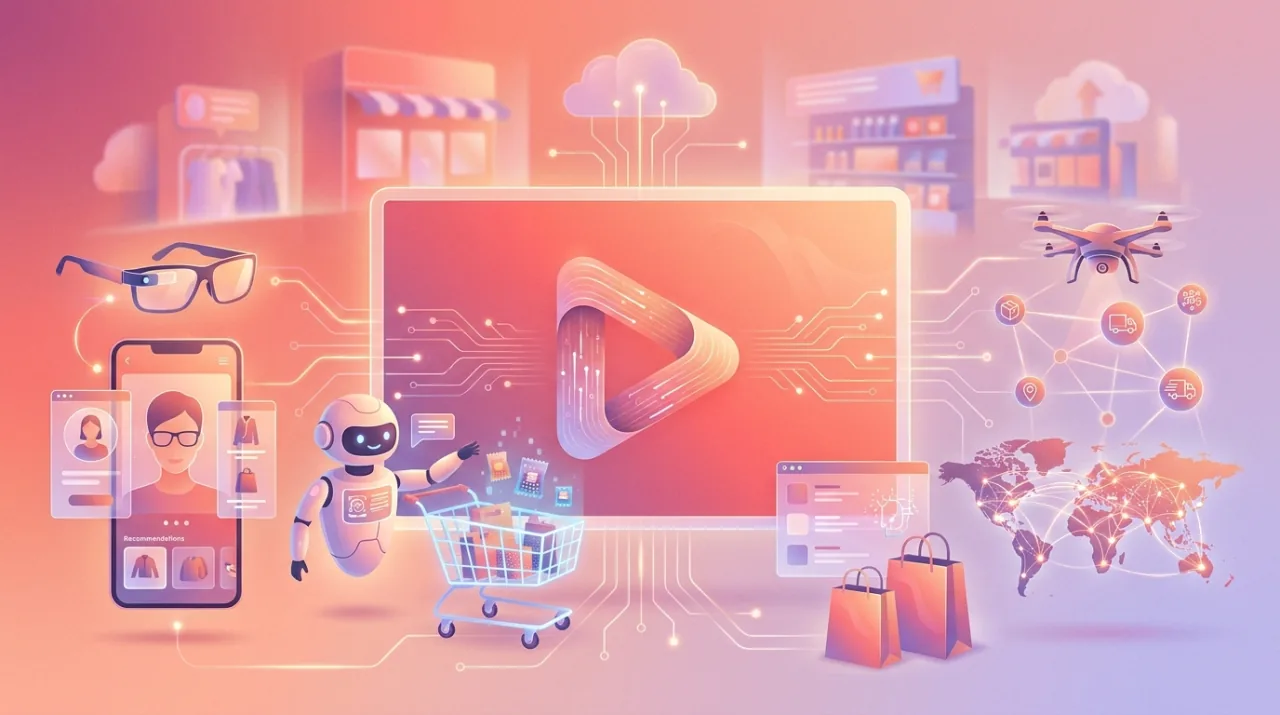
The landscape of consumer interaction with retail has undergone a seismic transformation, fundamentally shifting the traditional shopping paradigm. No longer is the simple search bar the primary gateway for discovering and purchasing goods; instead, an intelligent, conversational entity has taken its place. This pivotal moment, eloquently captured in Forbes’ July 19 piece on AI becoming retail’s “front door,” signals a profound evolution in how U.S. consumers engage with brands and products. The article precisely identifies a future where AI chatbots are not just assistants but central mediators in the entire shopping journey, prompting retailers to integrate these sophisticated tools into every facet of the purchase experience. This change isn't merely incremental; it represents a foundational re-architecture of consumer commerce, driven by the capabilities of advanced AI and the evolving expectations of a tech-savvy populace.
The implications for consumer AI and the broader ecosystem of AI agents are immense. This shift redefines conversational commerce as a major consumer-AI force, illustrating how shoppers are increasingly leveraging AI for everything from initial product research to the final transaction. Retailers, in a rapid response, are embedding AI-powered assistants like Walmart’s Spark and Amazon’s upgraded Alexa+ directly into their platforms, ensuring that AI is not just an optional feature but an integral part of the customer interaction. This transition signifies a critical move for AI agents, evolving them from mere information helpers to powerful transactional agents capable of orchestrating discovery, personalizing recommendations, and even integrating targeted advertisements seamlessly within the shopping flow. Moreover, the emergence of AI as the primary conduit to retail carries significant regulatory and competitive implications, poised to reshape search advertising, challenge existing platform power structures, and necessitate new frameworks for oversight in the U.S. market.
From Search Bars to Chatbots: The Consumer’s AI-Powered Shopping Journey
The decline of the traditional search bar as the primary tool for online shopping is not merely a technological upgrade; it's a reflection of changing consumer desires for greater efficiency, personalization, and a more intuitive interaction. Prior to this shift, consumers navigated vast catalogs via keywords, often sifting through numerous irrelevant results to find what they needed. The Forbes article vividly illustrates how, post-July 19, 2026, this cumbersome process is being supplanted by AI chatbots, offering a direct, conversational route to discovery and purchase.
Consumers are now articulating their needs in natural language, much like they would to a knowledgeable sales associate, but with the added power of instant access to a global inventory. Imagine asking an AI shopping assistant, "Find me ethically sourced running shoes under $150 that pair well with my existing workout gear, are suitable for trail running, and are available for same-day delivery to my address." A traditional search engine would struggle to parse such a complex, multi-faceted query, often breaking it down into individual keywords and returning a barrage of generic links. An AI chatbot, however, armed with advanced natural language processing (NLP) and contextual understanding, can interpret the nuances of the request, cross-reference personal style preferences, consider ethical sourcing databases, filter by price and availability, and even consult personal fitness profiles to recommend the perfect pair.
This granular level of personalization and efficiency is the core "why" behind consumers' migration to AI. They are no longer content with being presented a list of options; they demand solutions tailored precisely to their unique circumstances, preferences, and even emotional states. AI can learn from past purchases, browsing history, stated preferences, and even implicit cues within conversational patterns to offer recommendations that feel remarkably prescient. This proactive, empathetic, and hyper-personalized approach transforms a potentially tedious task into an engaging and often delightful experience, setting a new benchmark for consumer expectations in the digital age. The evolution is not just about finding products faster; it's about making the entire shopping experience feel more human, more intuitive, and infinitely more relevant to the individual.
Conversational Commerce: The New Paradigm of Purchase
At the heart of AI becoming retail’s "front door" lies the burgeoning concept of conversational commerce. This isn't a mere upgrade to customer service chatbots; it's a fundamental reimagining of the entire purchasing funnel, where dialogue becomes the primary interface for every stage, from initial discovery to final transaction. The Forbes piece underscores conversational commerce as a monumental consumer-AI shift, indicating a future where buying isn't about clicking through menus but about speaking or typing naturally with an intelligent agent that understands intent and context.
The technological backbone enabling this paradigm shift is a sophisticated interplay of Artificial Intelligence disciplines. At its core are advancements in Natural Language Processing (NLP), which allows AI systems to understand, interpret, and generate human language with remarkable accuracy. This is coupled with Large Language Models (LLMs) that provide the vast knowledge base and reasoning capabilities necessary for coherent and contextually relevant conversations. Furthermore, advanced AI inference engines process complex requests in real-time, cross-referencing colossal datasets of product information, customer profiles, inventory levels, and logistics details to provide immediate, actionable responses.
What truly differentiates advanced conversational commerce from its predecessors is its seamless integration across the entire customer journey. Consumers can begin a conversation inquiring about a product, receive personalized recommendations, compare features, read reviews, check stock, apply discounts, and complete the purchase—all within a single, continuous dialogue. This eliminates the friction points inherent in traditional e-commerce, such as navigating multiple web pages, filling out forms, or switching between different applications. The AI acts as a perpetual, always-on personal shopper, remembering previous interactions and preferences, thereby building a cumulative understanding of the consumer over time.
For example, a consumer might ask, "I'm planning a hiking trip to the Rockies next month. What gear do I need?" The AI agent wouldn't just list products; it could engage in a dialogue: "What kind of hiking? Day trips or overnight? What's your budget for a backpack?" Based on the responses, it could then recommend specific products—a waterproof tent, a lightweight stove, high-altitude appropriate hiking boots—provide detailed specifications, suggest bundles, and even guide the user through the checkout process, all while maintaining a natural, conversational flow. This transforms the shopping experience from a series of discrete actions into an ongoing, dynamic interaction, making the AI not just an information provider but a transactional facilitator, profoundly reshaping consumer engagement and purchase behaviors in the U.S.
Retailers Respond: Embedding AI Assistants into the Purchase Journey
The strategic imperative for retailers in the wake of AI becoming the "front door" is clear: adapt or risk obsolescence. The Forbes article highlights how retailers are not merely experimenting with AI; they are aggressively embedding AI assistants directly into the core of their purchase journeys, recognizing that consumer expectations have fundamentally shifted. This proactive adoption is driven by the undeniable benefits that AI brings: enhanced customer retention, a sharpened competitive edge, and unparalleled insights derived from customer data.
Take, for instance, the examples cited: Walmart’s Spark and Amazon’s upgraded Alexa+. These aren't just conceptual; they represent the vanguard of retail AI, offering capabilities far beyond simple voice commands or basic chatbot functions. Walmart’s Spark, post-2026, is envisioned as an omnipresent shopping companion. It might reside in the Walmart app, interact via smart home devices, or even offer in-store assistance through augmented reality interfaces. Spark could leverage a consumer's past purchases, dietary restrictions, preferred brands, and even local weather patterns to suggest meal plans, generate shopping lists, identify the best deals, and guide them through a seamless checkout, potentially even initiating autonomous delivery. Its sophistication lies in its ability to anticipate needs and proactively offer solutions, turning passive browsing into an active, guided shopping experience.
Similarly, Amazon’s upgraded Alexa+ moves well beyond its earlier role as a voice assistant for simple commands. This iteration is a sophisticated transactional agent, capable of mediating complex purchases. Alexa+ could, for example, understand a user's home decor preferences by analyzing their past purchases and even integrating with smart home device data. If a user asks, "Alexa, help me redecorate my living room," Alexa+ could suggest specific furniture pieces, color schemes, and accessories, show virtual previews, compare prices from various sellers (including third-party merchants on Amazon's marketplace), manage delivery schedules, and process payments—all through a natural conversation. Its ability to integrate with the vast Amazon ecosystem of products, services, and logistics makes it an incredibly powerful and sticky interface for consumers.
The strategic rationale for these retail giants is multifaceted. Firstly, by embedding these AI assistants, they capture and retain customer loyalty by offering a superior, frictionless shopping experience. Consumers are less likely to stray to competitors if their current AI assistant understands their needs intimately and can fulfill them effortlessly. Secondly, these AI systems generate vast amounts of invaluable data on consumer preferences, behaviors, and unmet needs, allowing retailers to continuously refine their offerings, optimize inventory, and personalize marketing efforts with unprecedented precision. This data-driven approach fuels a virtuous cycle of improvement.
Moreover, the impact isn't limited to retail behemoths. Smaller retailers, while perhaps lacking the internal resources to develop their own AI agents on the scale of Walmart or Amazon, are leveraging off-the-shelf AI solutions, integrating third-party conversational AI platforms into their e-commerce sites, or utilizing marketplace-provided AI tools. The imperative remains the same: meet the consumer where they are—at the AI "front door"—to stay relevant and competitive in this transformed retail landscape.
The Evolution of AI Agents: From Information to Transaction
One of the most profound implications highlighted by the Forbes article is the pivotal evolution of AI agents from mere information helpers to powerful transactional agents. Prior to this shift, consumer-facing AI largely functioned as an interactive FAQ, capable of answering queries, providing product specifications, or offering basic customer support. While useful, these "information helpers" stopped short of actively mediating the entire purchase journey. Post-July 19, 2026, the game has irrevocably changed; AI agents are now equipped and expected to facilitate discovery, drive recommendations, and crucially, handle transactions directly, becoming integral to the economic flow of retail.
The transformation into transactional agents means that AI is no longer a passive source of data but an active participant in the buying process. This is a qualitative leap. Consider the traditional scenario where a consumer asks for information about a product, then has to navigate a website, find the product page, add it to a cart, and go through checkout manually. A transactional AI agent streamlines this entire sequence, often executing it within the confines of a continuous conversation.
Mediating Discovery: This new breed of AI agent doesn't just respond to explicit queries; it proactively mediates discovery. Leveraging advanced machine learning, predictive analytics, and deep understanding of consumer profiles, these agents can anticipate needs even before they are fully articulated. For example, if a consumer recently bought camping gear, their AI might proactively suggest related items like portable power banks or weather-resistant apparel, or even new destinations, based on predicted travel patterns. This goes beyond simple "customers who bought this also bought..." to truly intelligent, context-aware suggestions that feel less like advertising and more like helpful insights. The AI understands the subtle cues in a user's language, browsing habits, and even external factors like news trends or social media activity to offer highly relevant, timely discoveries.
Personalized Recommendations: The level of personalization now possible far surpasses previous iterations. AI transactional agents can factor in a vast array of data points: past purchases, browsing history, stated preferences, items liked on social media, loyalty program data, demographic information, and even real-time contextual data like location, weather, and time of day. This allows for hyper-personalized recommendations that are not just accurate but also deeply resonant with the individual's current needs and preferences. An AI agent might recommend a specific brand of coffee based on a user’s historical preference for dark roasts, suggest a discount based on a loyalty program, and offer a specific delivery window aligned with their calendar, all in one fluid interaction.
The "Eventually Ads" Aspect: One of the most significant implications of AI becoming a transactional agent is its potential to reshape advertising. As AI agents mediate discovery and recommendations, they naturally become prime real estate for advertisements. The Forbes article rightly points out that ads will eventually be woven into the shopping flow, but likely in a manner fundamentally different from traditional banner ads or search result sponsorships. These will be "conversational ads" or "AI-curated promotions," intelligently integrated into the dialogue.
Imagine asking your AI agent, "I need a new laptop for graphic design." The AI might respond, "Based on your previous purchases and software usage, the XYZ Pro 15 from Brand A would be an excellent choice. Currently, Brand B is offering a limited-time bundle on their similar model, the ABC Studio, which includes a free year of cloud storage and a professional graphics tablet. Would you like to compare these options?" Here, the "ad" for Brand B is not an interruption but a relevant, helpful piece of information presented within the context of the user's need, mediated by the AI. This creates a new, incredibly powerful, and potentially less intrusive monetization channel for retailers and AI platform developers, but also raises ethical considerations regarding transparency and potential bias in promotional suggestions.
Furthermore, the concept of AI agents interacting with other AI agents is emerging. Your personal AI might negotiate with a retailer's AI for the best price, delivery terms, or even custom configurations, acting as a true digital fiduciary on your behalf. This evolution marks a transition where AI is not just assisting humans but actively participating in the economic fabric of commerce, fundamentally altering how value is exchanged in the U.S. consumer market.
Redrawing the Competitive Map: Regulatory Implications and Market Power
The profound shift of AI becoming retail’s “front door” is not merely a technological or consumer convenience story; it carries immense regulatory and competitive implications that promise to redraw the economic map of the U.S. retail and advertising sectors. The Forbes article astutely highlights that this transformation could irrevocably reshape search advertising and profoundly alter existing platform power dynamics, demanding the attention of Washington’s watchdogs.
Reshaping Search Advertising: For decades, search engine results pages (SERPs) have been the battleground for advertisers. Companies poured billions into search engine marketing (SEM) and search engine optimization (SEO) to secure top rankings, knowing that visibility on Google or Bing directly translated into sales. However, when consumers shift from typing keywords into a search bar to conversing with an AI chatbot, the traditional SERP becomes less relevant.
How do you advertise on a conversation? This is the core challenge. AI as the "front door" bypasses the traditional search advertising model, potentially reducing the efficacy and value of historical SEM strategies. Instead of paying for clicks on a sponsored link, advertisers will need to adapt to new forms of engagement:
- Conversational Ads: Brands might pay to have their products organically recommended by AI agents in specific contexts, similar to the "Brand B bundle" example discussed earlier. This requires deep integration with AI platforms and a focus on context-aware, value-add propositions rather than interruptive banners.
- AI-Curated Promotions: Retailers, through their AI agents, might offer "AI-exclusive deals" or special bundles that are dynamically generated and presented based on a consumer's profile and current conversation.
- Brand Trust and Integration: The emphasis shifts to ensuring a brand's products are well-indexed and favored by the AI agent's algorithms, implying a move towards algorithmic influence and brand relationships with AI developers.
This shift presents an existential challenge to existing search advertising behemoths and opens up new opportunities for those who control the conversational AI interfaces. The monetization models for these new "AI front doors" are still nascent but promise to be incredibly lucrative, sparking intense competition.
Platform Power: The concentration of power is another critical concern. If a few dominant AI agent providers or large retailers (like Amazon with Alexa+, or Walmart with Spark) control the primary interface for consumer shopping, they gain unprecedented influence over market access, product discovery, and pricing. This raises several urgent questions:
- Ownership of the AI Agent and Data: Who owns the consumer's shopping data generated through these AI interactions? Is it the consumer, the retailer, or the AI platform developer? The answer will dictate who benefits from the vast insights these agents generate and who bears the responsibility for data privacy and security.
- Potential for New Monopolies/Oligopolies: If one or two AI agents become universally adopted, they could establish a new form of market dominance, controlling not just what consumers buy but how they discover it. Will these AI agents prioritize their own brands or partner products, potentially stifling competition from smaller players?
- Interoperability Challenges: Will consumers be able to port their shopping preferences and history between different AI agents? Will AI agents from different platforms be able to communicate to find the best deals or compare products across various retailers, or will "walled gardens" emerge, trapping consumers within a single ecosystem?
Regulatory Watchdogs: These concerns inevitably attract the attention of U.S. regulatory bodies. Antitrust authorities will be keen to monitor:
- Fairness and Bias: Is the AI unfairly biasing recommendations towards certain brands or products, potentially at the expense of consumer choice or smaller businesses? Are there mechanisms for auditing AI algorithms for anti-competitive practices or discriminatory outputs?
- Data Privacy: The sheer volume and intimacy of data collected by transactional AI agents raise significant privacy concerns. How is consent obtained for data usage? Are there robust anonymization techniques? What are the implications under existing and future privacy laws like state-level data protection acts or potential federal privacy legislation?
- Consumer Protection: How can regulators ensure that AI agents do not engage in deceptive practices, misinform consumers, or facilitate price discrimination? The transparency of AI decision-making becomes paramount.
- Ethical AI Development: Beyond legal compliance, there's a growing push for ethical AI. Regulators and consumer advocates will demand transparency in how AI models are trained, how they make recommendations, and how potential biases in training data are mitigated.
The implications are clear: the rise of AI as retail's front door is not just a technological marvel but a socio-economic earthquake. It necessitates a proactive regulatory response to ensure fair competition, protect consumer rights, and prevent the concentration of unprecedented power in the hands of a few AI and retail giants, ensuring that the benefits of this innovation are widely distributed and responsibly managed across the U.S. economy.
Challenges and Opportunities in the AI-Powered Retail Future
The emergence of AI as retail’s “front door” ushers in an era replete with both unprecedented opportunities and significant challenges for consumers, businesses, and society at large. Navigating this new landscape successfully requires a clear-eyed understanding of both sides of the coin.
Key Challenges:
- Data Security and Privacy Breaches: The intimate nature of AI-driven shopping means these agents collect vast amounts of sensitive personal and behavioral data. Any breach could have catastrophic consequences, exposing financial details, purchase histories, and even deeply personal preferences. Protecting this treasure trove of data against sophisticated cyber threats will be a perpetual and escalating challenge.
- AI Bias and Fairness: AI models are only as unbiased as the data they are trained on. If training data reflects existing societal biases (e.g., demographic, gender, socioeconomic), the AI could inadvertently propagate or even amplify these biases in its recommendations, pricing, or product discovery, leading to discriminatory outcomes for certain consumer groups. Ensuring algorithmic fairness and transparency is critical.
- Job Displacement: As AI agents become more sophisticated transactional agents, capable of handling complex customer service queries, sales, and even order fulfillment logistics, there's a significant risk of job displacement in traditional retail roles, call centers, and potentially even marketing and sales positions. This necessitates societal planning for workforce retraining and adaptation.
- Cost of Implementation and Maintenance: For many retailers, especially small to medium-sized businesses, the initial investment in developing or integrating advanced AI assistants can be substantial. Beyond initial setup, ongoing maintenance, data processing, and model updates require significant resources, creating a potential divide between large, well-funded players and smaller enterprises.
- Maintaining the Human Touch/Experience: While AI offers unparalleled efficiency and personalization, some consumers may still crave human interaction for complex issues, emotional purchases, or simply for reassurance. Striking the right balance between AI automation and preserving opportunities for genuine human connection will be crucial to avoid alienating a segment of the customer base.
- User Trust and Adoption: Despite the clear benefits, widespread adoption hinges on consumer trust. Concerns about data privacy, algorithmic manipulation, and the reliability of AI recommendations could hinder user acceptance. Building transparent, ethical, and highly accurate AI systems will be key to fostering this trust.
Key Opportunities:
- Unprecedented Personalization: AI allows for a level of personalized shopping that was previously unimaginable. Every recommendation, every interaction can be precisely tailored to the individual, leading to more relevant suggestions and a significantly improved customer experience.
- Enhanced Customer Loyalty: By understanding and anticipating customer needs, AI agents can foster deeper relationships, leading to increased satisfaction and stronger brand loyalty. A frictionless, personalized shopping journey makes customers more likely to return.
- New Revenue Streams for Retailers: Beyond direct sales, AI-driven platforms can open new monetization avenues through contextual advertising, premium personalization features, and insights derived from aggregated data (responsibly and ethically used).
- Operational Efficiencies: AI can automate many routine tasks, from customer support to inventory management and supply chain optimization. This frees up human employees to focus on more complex, creative, or empathetic tasks, while reducing operational costs and improving overall efficiency.
- Hyper-Targeted Marketing: The rich data collected by AI agents enables hyper-targeted marketing campaigns that are far more effective than traditional broad-stroke advertising. Brands can reach the right customer with the right message at the right time, maximizing ROI.
- Accessibility for Diverse Consumer Groups: AI can break down barriers for consumers with disabilities or those who face language barriers. Conversational interfaces, voice commands, and personalized assistance can make shopping more accessible and inclusive for a wider demographic.
- Innovation and Competitive Edge: For businesses that successfully embrace AI as retail's front door, it offers a significant competitive advantage. Early adopters and innovators can set new industry standards, attract leading talent, and capture market share in this rapidly evolving landscape.
The journey ahead will undoubtedly involve navigating these challenges with robust technological solutions, ethical frameworks, and thoughtful regulatory oversight, while simultaneously harnessing the transformative opportunities to redefine consumer retail in the U.S.
The Road Ahead: What's Next for Consumer AI and Retail?
The implications drawn from Forbes’ July 19, 2026 piece mark a pivotal moment, yet the evolution of consumer AI and retail is far from complete. This "front door" is merely the entrance to an even more intelligent and integrated shopping future. The next phase will likely see exponential advancements, pushing the boundaries of personalization, convenience, and immersive experiences, while simultaneously engaging in an ongoing dance with regulatory bodies.
One significant trajectory is the relentless advancement of predictive analytics becoming even more sophisticated. Current AI agents react and respond; future agents will anticipate and proactively engage. Imagine an AI agent not just recommending a new pair of shoes when your current ones wear out, but identifying subtle shifts in your routine, health data, or even mood through other connected devices, and suggesting products or services before you even consciously realize a need. For instance, noticing an increase in outdoor activity and colder temperatures, it might suggest a high-performance winter jacket, integrating local weather forecasts and personal style preferences. This moves from reactive assistance to truly proactive curation of a consumer's life.
The integration with Augmented Reality (AR) and Virtual Reality (VR) is set to revolutionize immersive shopping. While AI chatbots handle the conversational aspect, AR/VR will provide the visual and experiential layer. Picture asking your AI agent, "Show me how this sofa would look in my living room," and instantly seeing a photorealistic rendering overlaid on your real space via AR glasses or your phone. Or, for a more complex purchase like a car, stepping into a VR showroom curated by your AI agent, allowing you to "test drive" various models and customize interiors virtually, all while the AI conversationally guides you through options and purchase pathways. This blends the intelligence of AI with the sensory richness of immersive tech, creating unparalleled shopping experiences.
We're also likely to see the rise of truly "proactive" AI agents that anticipate needs before consumers even articulate them. These agents will operate with an unprecedented level of autonomy and predictive capability, learning not just from direct interactions but from ambient data streams – IoT devices in the home, health trackers, calendar events, and even real-time news feeds. An AI might automatically reorder pantry staples based on consumption patterns, suggest flight and accommodation options for an upcoming holiday based on your calendar and preferences, or alert you to a recall on a product you previously purchased. This degree of "set it and forget it" convenience will redefine consumer expectations of service.
Furthermore, the increased competition among AI agent developers will drive rapid innovation. As the market for AI "front doors" matures, new players will emerge, challenging existing giants. This competition will likely lead to more specialized AI agents (e.g., financial planning AI, health and wellness AI, home maintenance AI) that integrate seamlessly with general shopping AI agents. Consumers might have a suite of interconnected AI agents, each specializing in a different aspect of their life, all working in concert to optimize their decisions and purchases. This could also foster greater interoperability and open standards, preventing the creation of closed, monopolistic ecosystems.
Finally, the ongoing dance between innovation and regulation will continue to shape the trajectory. As AI capabilities expand, so too will the complexity of ethical and legal considerations. Issues around deepfakes in product imagery, algorithmic price gouging, AI-driven manipulation of consumer behavior, and the use of biometric data will require continuous legislative and policy adaptation. Regulators will be challenged to balance fostering innovation with protecting consumer rights and ensuring fair market competition, striving to create frameworks that allow the beneficial aspects of AI to flourish while mitigating its potential harms. The future will be defined not just by what AI can do, but by how society chooses to govern its capabilities.
Embracing the AI Retail Revolution
The Forbes’ July 19 piece, spotlighting AI as retail’s "front door," is more than a momentary snapshot of technological progress; it is a declaration of a fundamental paradigm shift that has reshaped consumer commerce in the United States. We have moved decisively past an era where search engines were the primary navigators of digital marketplaces. In its place, we now stand at the threshold of a new epoch defined by intelligent, conversational AI agents that are not just assisting but actively mediating every aspect of the shopping journey.
This revolution is characterized by the profound transformation of consumer behavior, as shoppers increasingly leverage AI chatbots for seamless research and purchase. It is equally defined by the proactive response of retailers, who are rapidly embedding sophisticated AI assistants like Walmart’s Spark and Amazon’s upgraded Alexa+ directly into their operational core, recognizing that the future of customer engagement is intrinsically linked to intelligent, personalized interaction. The evolution of AI agents from mere information helpers to powerful transactional agents – capable of orchestrating discovery, delivering hyper-personalized recommendations, and even subtly integrating advertisements into the natural flow of conversation – underscores the depth of this change.
Crucially, the implications extend far beyond enhanced shopping convenience. This shift carries weighty regulatory and competitive consequences, threatening to upend established models of search advertising and concentrate unprecedented platform power in the hands of a few dominant AI developers and retail behemoths. The urgent need for robust regulatory oversight, addressing concerns of data privacy, algorithmic bias, and market fairness, is paramount to ensure a just and equitable future for all participants in this new AI-driven economy.
Ultimately, the AI retail revolution is not a transient trend to be observed from afar; it is a foundational restructuring of how we discover, interact with, and purchase goods and services. It demands proactive adaptation from businesses, vigilant oversight from regulators, and an informed, engaged approach from consumers. By embracing the capabilities of AI while steadfastly addressing its challenges, we can collectively navigate this transformative era, ensuring that the future of shopping is not only intelligent but also equitable, personalized, and truly revolutionary.