The Rise of Conversational Commerce Transforming Online Shopping Through AI
The digital landscape of online shopping is undergoing a profound and irreversible transformation, spearheaded by the rapid emergence and integration of AI chatbots. What began as a nascent technology for customer service is now fundamentally reshaping consumer behavior, creating entirely new paradigms for discovery, interaction, and purchase. The era of conversational buying is not just on the horizon; it is here, actively redefining the path from initial interest to final checkout, and brands that fail to adapt risk being left in the wake of this technological tsunami.
For years, the online shopping journey was largely dictated by search engines. Consumers would identify a need, formulate a query using keywords, sift through pages of results, compare products across various sites, and then, perhaps, make a purchase. This linear, often arduous process, while effective for its time, inherently contained friction points. Today, AI chatbots are dismantling these traditional barriers, offering a streamlined, intuitive, and remarkably personal shopping experience that feels less like a hunt and more like a guided conversation with a knowledgeable assistant.
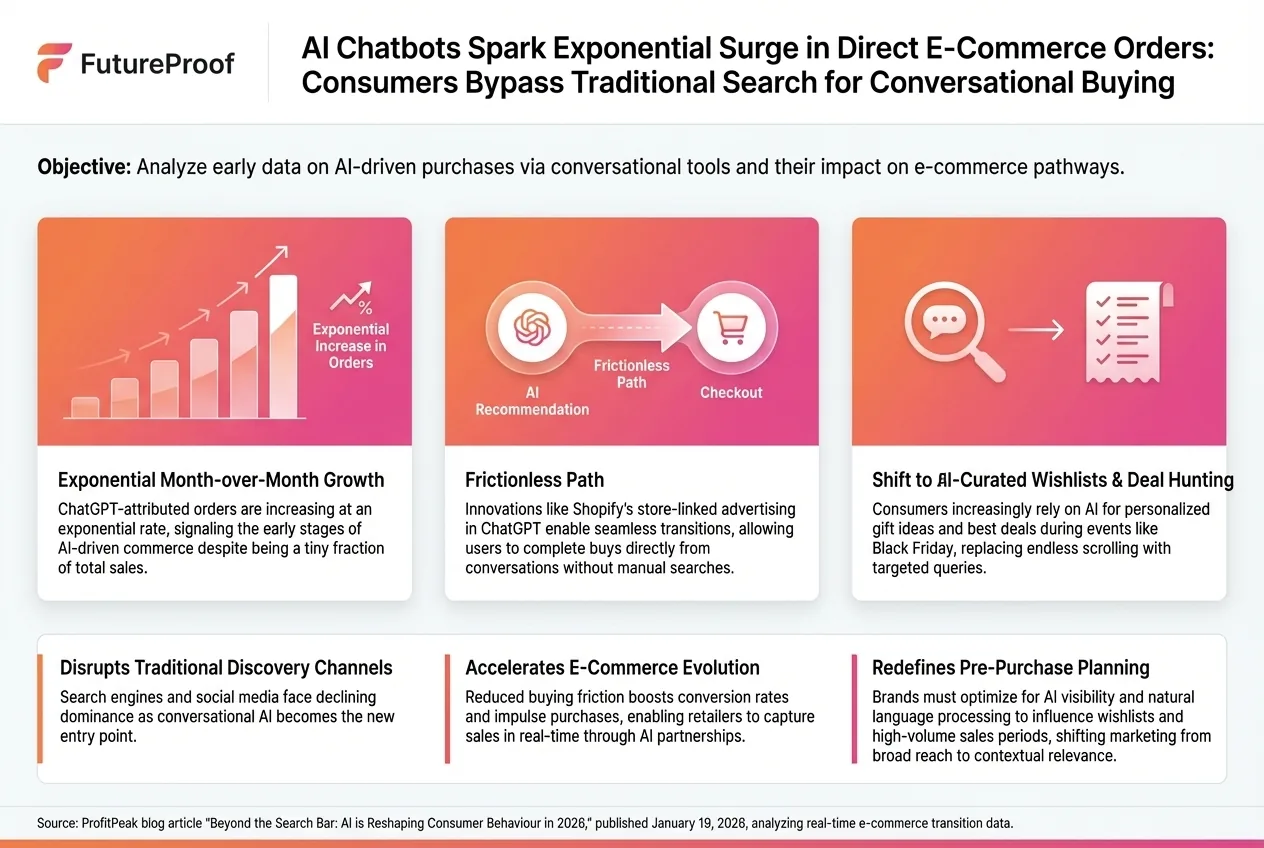
New data paints a vivid picture of this seismic shift. Reports indicate that ChatGPT-attributed orders are climbing at an exponential rate month over month, signaling a decisive move towards conversational commerce. While these orders currently represent a relatively small share of overall sales, their meteoric rise is a clear harbinger of future dominance. This isn't merely an incremental improvement in e-commerce; it's a fundamental re-architecture of how consumers discover, evaluate, and acquire products online. The very starting point of the shopping journey is moving from the sterile search bar to dynamic, intelligent AI conversations.
The implications of this shift are monumental. Consumers are no longer content with passive information retrieval; they seek active, tailored guidance. This is where AI-driven recommendations excel. Instead of relying on broad, keyword-based searches that might yield thousands of irrelevant results, shoppers are now engaging with AI chatbots that understand context, interpret nuanced preferences, and proactively suggest products or services that genuinely align with their needs. This creates an incredibly frictionless path from chat to checkout, often bypassing the traditional multi-step journey entirely.
Consider the practical applications. E-commerce platforms like Shopify have been quick to recognize and capitalize on this trend, integrating functionalities that allow users to purchase directly from within a conversational interface. Imagine discussing a new outfit with an AI assistant, receiving style recommendations based on your stated preferences and past purchases, and then, with a simple confirmation within the same chat window, making the purchase. The need to navigate to product pages, add items to a cart, or manually input payment details can be significantly reduced, if not entirely eliminated. This seamless experience not only delights consumers but also drastically shortens the sales funnel, transforming potential interest into immediate revenue.
During peak shopping moments, the power of conversational AI becomes even more pronounced. Black Friday, Cyber Monday, and other high-volume sales events are historically characterized by frantic searches for the best deals and the perfect gifts. Now, AI chatbots are empowering shoppers to navigate this deluge of options with unprecedented ease. Consumers are leveraging AI to build personalized wishlists, collating desired items from various brands and categories based on conversational inputs. Furthermore, these intelligent assistants can surface the best deals across multiple retailers in a matter of seconds, comparing prices, checking stock, and even advising on optimal purchase times. This level of personalized efficiency was once unimaginable, requiring hours of manual research; now, it's an instantaneous reality, delivered via a simple chat.
This profound transformation matters because traditional discovery channels are unequivocally losing ground. The finely tuned SEO strategies and expansive advertising campaigns that once drove traffic and sales are still relevant, but their primacy is being challenged by the direct, personalized engagement offered by conversational AI. The new starting point for many consumers is no longer a search engine results page but a chatbot query. This necessitates a radical rethinking of how brands approach their digital presence and marketing efforts.
The imperative for brands is clear: they must now optimize for AI visibility. This is a nuanced shift from traditional SEO. While keywords still play a role, the emphasis moves beyond mere frequency or density to deep contextual relevance. AI algorithms prioritize understanding the intent behind a user's natural language queries, meaning brands need to ensure their product information, content, and messaging are structured to be semantically rich and easily digestible by AI. The goal is not just to be found, but to be understood and recommended as the most relevant solution within a conversational flow. This means focusing on clear, concise product descriptions, comprehensive FAQs, and content that directly answers potential customer questions in a conversational style.
The benefits of reduced friction extend far beyond customer satisfaction; they accelerate conversions and empower retailers to capture impulse-driven sales in real time. When the path from desire to purchase is shortened to mere seconds, the psychological barrier to buying is significantly lowered. AI chatbots can act as expert sales associates, guiding consumers through product choices, offering complementary items, and facilitating immediate transactions, capitalizing on those fleeting moments of consumer intent that might otherwise evaporate amidst a cumbersome checkout process. This real-time sales capture capability is a game-changer for revenue generation and inventory management.
To underscore the magnitude of this evolution, it is critical to reference the hard data. According to a January 19, 2026, ProfitPeak article titled "Beyond the Search Bar: AI is Reshaping Consumer Behaviour in 2026," while still representing a small share of overall sales, ChatGPT-attributed orders are rising exponentially month over month. This key data point, sourced from recent industry analysis, is a stark indicator of the direction in which consumer behavior is trending. It confirms that although the current volume might be modest, the growth trajectory is undeniable and set to redefine market share in the very near future. The exponential climb is the most crucial takeaway, signaling a future where conversational AI will be not just a significant, but perhaps the dominant, channel for online commerce.
Beyond immediate sales, AI chatbots are also instrumental in fostering deeper customer relationships. By remembering past interactions, preferences, and purchase history, AI can offer a truly personalized shopping journey that evolves with the customer. This level of individualized attention builds loyalty and trust, transforming transactional relationships into enduring brand affiliations. A chatbot that remembers your shoe size, preferred colors, and even your past queries about sustainable products becomes an invaluable shopping companion, far exceeding the capabilities of a static e-commerce site.
The transition to an AI-driven commerce ecosystem demands a proactive strategy from brands. It’s no longer enough to have a good product or an attractive website. Brands must invest in understanding how AI processes information, how to optimize their digital assets for conversational interfaces, and how to integrate AI chatbots seamlessly into their customer service and sales funnels. This includes training proprietary AI models with specific brand knowledge, refining conversational flows to mirror brand voice, and ensuring robust back-end integrations for inventory, pricing, and order fulfillment.
Furthermore, the ethical considerations and challenges of this AI-powered future cannot be overlooked. Brands must ensure transparency in their use of AI, safeguard customer data meticulously, and design chatbots that are helpful and unbiased. Maintaining a consistent brand voice across all AI interactions is also crucial, ensuring that the conversational experience aligns with the brand's overall identity and values. The goal is to enhance, not diminish, the human element of brand interaction.
In conclusion, the transformative power of AI chatbots in reshaping online shopping is undeniable and accelerating at an unprecedented pace. The shift from search-based discovery to AI-driven recommendations is creating a frictionless, personalized path from chat to checkout, fundamentally altering consumer behavior and expectations. ChatGPT-attributed orders are climbing exponentially, a clear indication that conversational buying is rapidly becoming a cornerstone of modern e-commerce. Brands that embrace this shift, prioritizing AI visibility, contextual relevance, and seamless conversational experiences, will be best positioned to thrive in this new landscape. Those that lag behind risk being outmaneuvered by competitors who understand that the future of online shopping is not just digital, but deeply, intelligently conversational. The time for adaptation is now, for the AI-powered shopping revolution is well underway, and its impact will only continue to grow.