How AI Is Taking Over the Moment We Buy
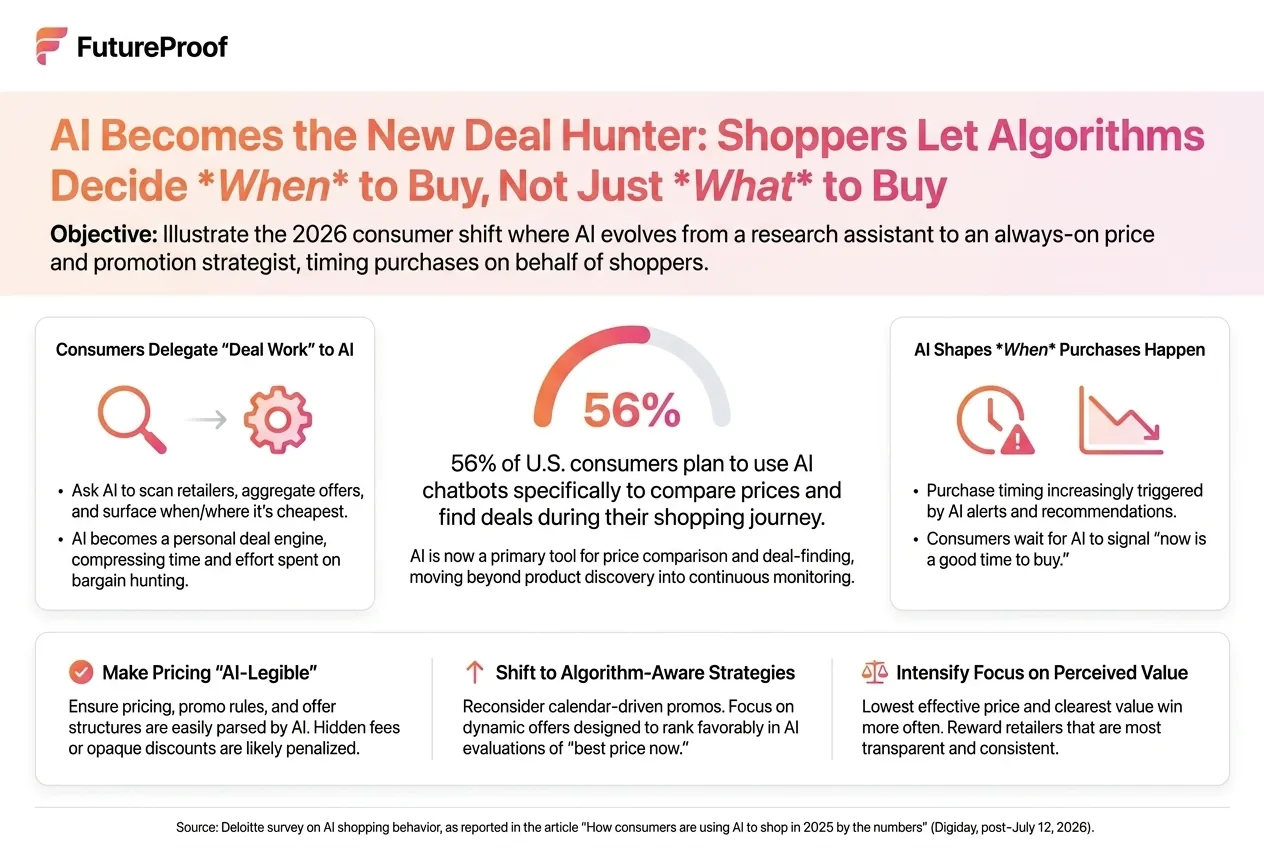
The landscape of consumer commerce is undergoing a seismic transformation, driven by the pervasive integration of artificial intelligence into the most intimate aspects of our purchasing decisions. We are witnessing a profound evolution where shoppers are ceding control of not just what they buy, but crucially, when they buy, to sophisticated algorithms. This marks a radical departure from traditional shopping behaviors, heralding an era where AI isn't merely a research tool but an active, decisive participant in the transaction timeline. A significant bellwether of this shift is the compelling data from Deloitte, reported by Digiday, which indicates a staggering 56 percent of U.S. shoppers are actively planning to leverage AI chatbots specifically for comparing prices and unearthing the best deals. This isn't just a trend; it's a fundamental recalibration of power dynamics between consumers, retailers, and the intelligent agents mediating their interactions.
Historically, the pursuit of a good deal was a labor-intensive endeavor. Consumers spent countless hours manually browsing multiple websites, clipping coupons, scouring weekly circulars, and waiting for major sales events like Black Friday or Cyber Monday. This manual bargain hunting was a skill, a hobby for some, and a necessary chore for many others aiming to maximize their savings. The advent of comparison shopping websites offered a partial solution, aggregating price data, but still required explicit user initiation and navigation. Now, AI is stepping into this space, not as a passive aggregator, but as a proactive, always-on personal deal engine. These intelligent systems are designed to constantly monitor price fluctuations across an expansive network of retailers, analyzing historical data, predicting future price movements, and identifying optimal purchase windows in real time. The moment a price drops, or a superior offer emerges, the AI alerts the shopper, transforming the decision to buy from a planned event into an opportunistic reaction. This shift means that the very moment of purchase is increasingly dictated by an algorithm, a radical change that reshapes everything from consumer expectations to retailer promotional strategies.
For retailers, this presents an urgent imperative to rethink their entire approach to pricing, promotions, and customer engagement. The era of static price tags and rigidly scheduled promotional calendars is rapidly diminishing in influence. When AI is constantly scouring the market for the best value, a retailer's traditional pricing strategy, which might include specific seasonal sales or fixed-duration discounts, becomes less effective if it's not transparently discoverable and easily digestible by AI systems. Offers must now be meticulously structured, clearly articulated, and easily parsed by algorithms to stand a chance of being prioritized in AI-driven comparisons. This necessitates a move towards dynamic pricing models that can adapt in real-time to market conditions, competitor pricing, and demand fluctuations – all with an eye toward how an AI assistant will interpret and present that information to a potential buyer. Retailers who fail to make their offers AI-friendly risk their products being deprioritized, or even entirely overlooked, by the powerful algorithmic gatekeepers guiding consumer purchases. The competitive battleground is no longer just about product quality or brand prestige; it's increasingly about price transparency and the algorithmic digestibility of promotional mechanics.
The implications for customer loyalty are equally profound. With more than half of U.S. consumers adopting AI for deal seeking, the traditional bonds of loyalty to a specific retailer are beginning to fray. Where consumers once might have chosen a particular store for its consistent service, reliable inventory, or familiar brand experience, they are now empowered by AI to consistently identify whichever retailer offers the best value at any given moment. This cultivates a new form of loyalty: loyalty to the AI assistant itself, or more accurately, loyalty to the value it consistently delivers. Consumers become loyal to savings, convenience, and optimal timing, rather than exclusively to a particular brand or storefront. This challenges retailers to cultivate loyalty beyond just competitive pricing, necessitating innovative approaches to customer experience, personalized value propositions, and unique benefits that transcend a mere price comparison. Building trust with consumers in an AI-mediated environment will require retailers to demonstrate not only competitive pricing but also authenticity and added value that algorithms might not fully capture, such as exceptional post-purchase support, exclusive product access, or a superior brand narrative.
The technological underpinnings of this shift are multi-faceted, leveraging advancements in natural language processing (NLP), machine learning, and vast data analytics. AI chatbots, equipped with sophisticated NLP capabilities, can understand complex queries from users and then, through machine learning algorithms, process colossal amounts of pricing data from millions of products across thousands of retailers. They track price histories, identify patterns, and even predict when a price might drop further based on inventory levels, demand signals, and competitor actions. This predictive power allows AI to offer truly proactive recommendations, nudging shoppers to act at precisely the opportune moment. For instance, an AI might monitor the price of a specific television model across Amazon, Best Buy, and Walmart for weeks, learning its typical price range, identifying the lowest historical price, and then alerting the user only when the current price matches or beats that benchmark. This level of informed, real-time guidance is something no human shopper, no matter how diligent, could consistently achieve.
This transformation also redefines the role of marketing and advertising. Instead of broadly targeted campaigns designed to drive traffic to a sale event, marketing efforts might need to focus more on reinforcing brand value and less on time-sensitive discounts that AI can instantly undercut or expose as non-optimal. Retailers might need to advertise to the AI as much as to the consumer, ensuring their data feeds are clean, their pricing information is accurate, and their promotional terms are transparently structured. Furthermore, the rise of AI deal hunters means that consumers are less likely to be swayed by psychological pricing tricks or artificial scarcity tactics. The AI can see through these ploys, armed with objective data, ensuring consumers are getting genuine value rather than perceived value. This pushes retailers towards greater authenticity and a focus on delivering actual savings, rather than just the illusion of one.
The long-term implications for the e-commerce ecosystem are immense. We could see the proliferation of specialized AI shopping agents, each catering to different consumer segments or product categories. These agents might negotiate prices directly with retailers on behalf of the consumer, blurring the lines between buyer and seller even further. The integration of AI with Internet of Things (IoT) devices could mean that our smart homes are not just ordering consumables when they run low, but actively seeking out the best price for those consumables across multiple suppliers at the optimal time. Imagine your smart refrigerator not just notifying you when you’re out of milk, but automatically identifying the lowest price for your preferred brand across three different local grocers and scheduling a delivery or alerting you to pick it up on your way home. This level of algorithmic orchestration of daily purchases could become the norm.
However, this future also poses critical questions. Data privacy becomes paramount as AI systems accumulate vast amounts of personal purchasing data and preferences. The ethical implications of AI potentially manipulating market prices or creating unfair competitive advantages for certain retailers will need careful consideration and regulation. Ensuring transparency in AI's decision-making process will be crucial for maintaining consumer trust. Despite these challenges, the overwhelming convenience and economic benefits offered by AI deal hunters are proving to be irresistible to a growing majority of consumers. The 56 percent adoption rate for AI chatbots in price comparison is merely the tip of the iceberg, signaling a broader acceptance and reliance on intelligent systems to navigate the complexities of modern commerce.
The shift signifies not just a technological upgrade but a fundamental cultural change in how we approach consumption. Shoppers are increasingly comfortable delegating cognitive load to AI, trusting algorithms to perform tasks that were once integral to their own financial management and shopping routines. This trust is built on the promise of efficiency, accuracy, and undeniable savings. As AI continues to evolve, becoming even more sophisticated in its ability to understand consumer intent, predict market movements, and negotiate value, its role as the primary deal hunter will only solidify. Retailers who embrace this new reality, investing in AI-friendly data structures, dynamic pricing capabilities, and transparent promotional strategies, will be best positioned to thrive. Those who cling to outdated models risk being left behind in a market increasingly governed by the silent, powerful hand of algorithmic intelligence, where the moment to buy is decided not by a shopper's whim, but by the relentless pursuit of optimal value by an AI. The future of shopping is here, and it’s smarter, faster, and driven by data, not just desire.