The Rise of AI as the New Co Parent in Modern Family Life
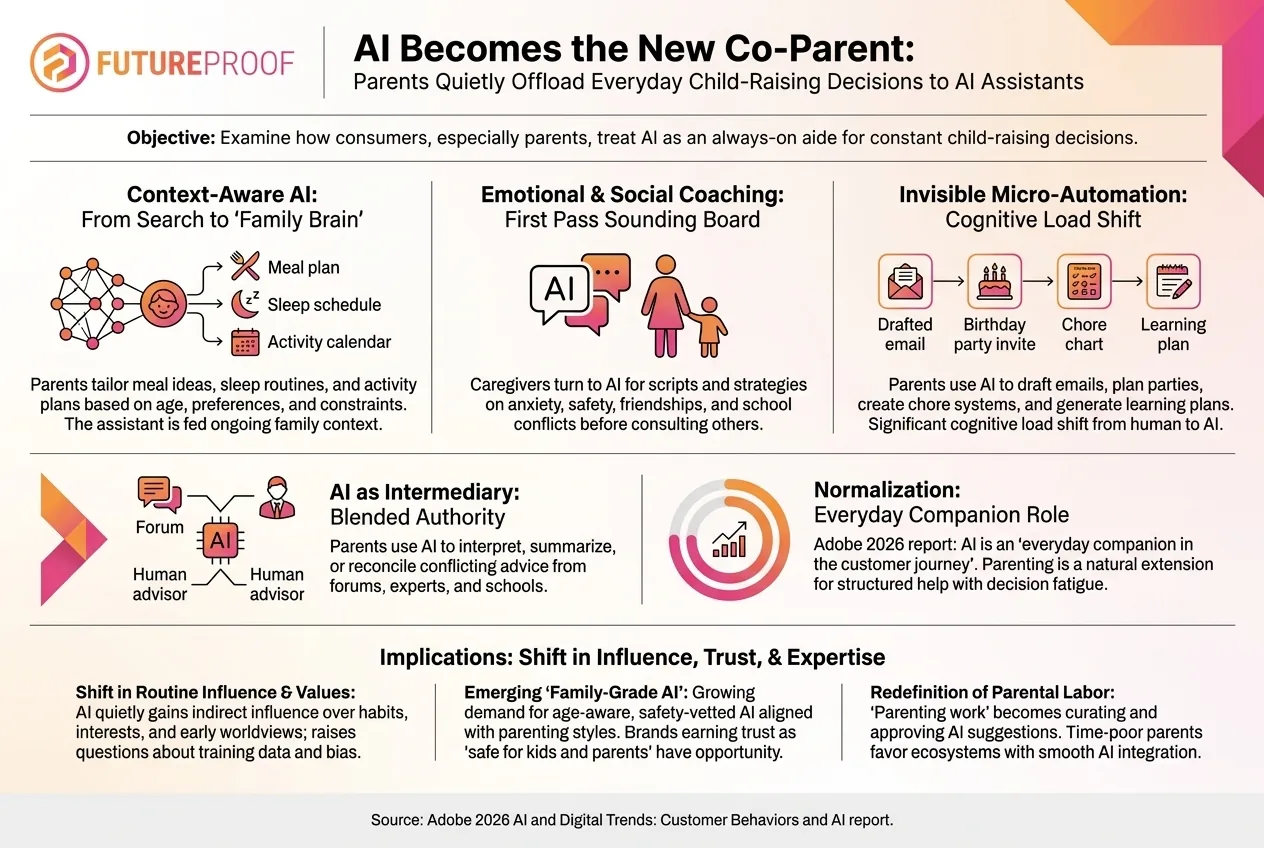
In the labyrinthine world of modern parenting, where every moment is a negotiation between demanding schedules, evolving child development needs, and personal well-being, a quiet revolution is taking hold. Gone are the days when parents solely relied on instinct, grandparental advice, or thick parenting manuals. Today, a new, ever-present assistant is entering the fold, not through a traditional childcare arrangement, but through the digital ether: Artificial Intelligence. AI is emerging as the unexpected co-parent, a silent partner that parents are increasingly entrusting with the myriad of everyday child-raising decisions, fundamentally reshaping the landscape of domestic life and lightening the immense cognitive load that defines contemporary parenthood.
The concept of an “always on” aide for daily child-raising decisions is no longer a futuristic fantasy but a present-day reality. For parents navigating the intricate dance of nurturing, educating, and managing their children's lives, AI offers an unprecedented level of support. Imagine a personalized consultant available 24/7, ready to weigh in on everything from the nuances of a toddler's tantrum to the optimal nutrition for a growing pre-teen. This isn't about replacing the human element of parenting, but rather augmenting it, providing a consistent, data-driven, and non-judgmental sounding board that helps parents make informed choices without the added pressure of guilt or exhaustion. AI acts as an extension of a parent’s own capacity, offering not just answers, but tailored strategies that consider the unique dynamics of each child and family. This continuous availability ensures that support is always just a query away, providing peace of mind and reducing the common feeling of isolation many parents experience when faced with complex decisions.
One of the most tangible ways AI is stepping into this co-parenting role is through the creation of highly personalized plans for a child's fundamental needs: meals and sleep. The daily grind of feeding a family can be a relentless challenge. Picky eaters, dietary restrictions, allergies, and the constant demand for novelty often leave parents feeling creatively drained and nutritionally uncertain. AI-powered assistants can take the guesswork out of meal planning, generating personalized menus that cater to individual tastes and nutritional requirements while adhering to allergy constraints. These intelligent systems can suggest diverse, balanced recipes, compile shopping lists, and even offer meal prep tips to save precious time. For a parent struggling with a child who refuses vegetables, AI might suggest a series of "hidden veggie" recipes or provide engaging facts about the benefits of certain foods, framed in a way that resonates with a child's age and interests. This goes beyond simple recipe generation; it’s about understanding the specific nutritional journey of a child and supporting parents in fostering healthy eating habits without daily battles. The result is not just healthier kids, but parents liberated from the mental burden of perpetual meal ideation.
Similarly, achieving optimal sleep for children is a cornerstone of their development and a perpetual quest for many parents. From newborn sleep regressions to school-aged anxieties keeping kids awake, establishing consistent and effective sleep routines is a monumental task. AI assistants can analyze a child’s sleep patterns, suggest age-appropriate bedtimes, and offer evidence-based strategies for improving sleep hygiene. They can help parents troubleshoot common sleep issues, provide guidance on managing transitions (like moving from a crib to a bed), and even generate soothing bedtime stories or guided meditations tailored to a child’s age. For parents grappling with erratic sleep schedules, AI can be a game-changer, providing structured advice and consistent reinforcement that helps establish calming routines, leading to more restorative sleep for both children and their exhausted caregivers. This personalized approach recognizes that every child is different, and what works for one may not work for another, offering adaptable solutions rather than one-size-fits-all advice.
Beyond these foundational aspects, AI’s utility extends into the intricate social and emotional landscape of childhood. Modern parenting often demands navigating tough conversations, from explaining complex world events to addressing social challenges like bullying or peer pressure. Many parents find themselves at a loss for words, unsure how to approach sensitive topics in an age-appropriate and empathetic manner. Here, AI acts as a sophisticated communication coach, capable of generating scripts for these challenging social conversations. Whether it’s helping a parent explain grief, divorce, or a difficult friendship dynamic, AI can provide nuanced language, suggested talking points, and empathetic responses, helping parents articulate their thoughts clearly and compassionately. It empowers parents to feel more prepared and confident in discussions that might otherwise cause anxiety, ensuring that children receive thoughtful, consistent guidance during critical developmental stages. These AI-generated scripts aren't meant to be read verbatim, but rather to serve as a framework, offering a starting point and examples of effective communication strategies, allowing parents to add their personal touch while benefiting from expert-level guidance.
The sheer volume of decisions, tasks, and emotional labor inherent in parenting contributes to what is often described as "cognitive load." This mental burden encompasses everything from remembering appointments and school events to making micro-decisions about screen time, healthy snacks, and discipline strategies. AI assistants are quietly stepping in to lighten this load, acting as an external processor for many of these mundane yet critical tasks. By automating or assisting with these decisions, AI frees up valuable mental space for parents, allowing them to engage more fully and intentionally with their children rather than being constantly preoccupied with logistics and planning. This reduction in decision fatigue is profound, leading to less parental stress, increased presence, and a greater capacity for joy in the parenting journey. It's akin to having a tireless, highly organized personal assistant dedicated solely to the intricate details of child-rearing, allowing parents to reclaim energy for what truly matters: connection and growth.
The quiet automation of dozens of micro-tasks is perhaps where AI’s impact is most keenly felt on a daily basis. Consider the endless stream of school-related communications: drafting emails to teachers about absences, clarifying homework assignments, inquiring about a child’s progress, or simply responding to school newsletters. Each of these small tasks, while individually minor, collectively consumes significant time and mental effort. AI can now draft professional, polite, and comprehensive school emails in moments, saving parents precious time and ensuring clear communication. Whether it's an email requesting clarification on a field trip or an update on a child’s behavioral issue, AI can generate appropriate, well-articulated messages, tailored to the specific context. This takes the pressure off parents to craft perfect prose under time constraints, ensuring that important communications are handled efficiently and effectively.
Beyond administrative tasks, AI is also proving invaluable in building personalized learning plans. Every child learns differently, possesses unique interests, and faces distinct academic challenges. An AI assistant can analyze a child's learning style, identify areas for improvement or enrichment, and suggest a wealth of resources – from educational apps and online courses to specific books and hands-on activities. These customized learning pathways extend beyond traditional academics, encompassing skill development in areas like coding, music, creative writing, or even social-emotional learning. For a child passionate about dinosaurs, AI could generate a bespoke curriculum incorporating interactive games, documentaries, virtual museum tours, and age-appropriate books, fostering deep engagement and sustained learning. This capability transforms learning support from a generic offering to a highly tailored, engaging experience, positioning AI as an invaluable tool for supplementary education and talent development. It empowers parents to provide truly individualized educational support that might otherwise require the time and expertise of multiple private tutors or specialists.
These examples collectively demonstrate a fundamental shift in how everyday parenting work is done. It's moving from a largely manual, reactive, and often overwhelming endeavor to a more strategic, proactive, and supported one. Parents are no longer solely responsible for holding all the fragmented pieces of information and decision-making; they have an intelligent partner helping them organize, analyze, and act upon it. This isn't about AI replacing the emotional core of parenting, but rather serving as a powerful logistical and informational engine that clears the path for parents to be more present, more joyful, and more effective in their human role. The "augmented parent" emerges – a caregiver whose innate love and intuition are amplified by the precision and efficiency of artificial intelligence, creating a more harmonious and less stressful family environment.
This evolving readiness for AI in personal daily decisions is not anecdotal; it's a trend validated by significant industry insights. According to Adobe’s 2026 AI and Digital Trends report, AI has unequivocally become an everyday companion in the customer journey, from initial search queries and shopping experiences to comprehensive customer support. This pervasive integration of AI into diverse aspects of consumer life unequivocally demonstrates that individuals are not only ready but increasingly comfortable with and expectant of AI's involvement in their personal daily decisions. The report underscores a societal shift where AI is no longer a niche technology but an accepted, even preferred, interface for managing complexity and seeking personalized solutions. This widespread acceptance in areas like shopping and support naturally extends to the realm of parenting, signaling that parents are primed to embrace AI as a trusted aide for the deeply personal and critical decisions surrounding their children. The comfort level is already established; the application to parenting is the next logical step in AI's seamless integration into our lives.
Looking ahead, the role of AI in family life is poised for even deeper integration and sophistication. We can anticipate AI tools that are even more intuitive, predictive, and seamlessly embedded into our routines, perhaps anticipating needs before they are explicitly voiced. The ethical considerations around privacy, data security, and the potential for over-reliance will undoubtedly continue to be important discussions. However, the trajectory is clear: AI is not a fleeting trend but a transformative force. The future of parenting will likely involve a rich tapestry of human connection augmented by intelligent technology, where AI acts as a supportive backbone, empowering parents to focus on the unique joys and challenges of raising children, knowing they have a reliable, always-on partner in their corner. It will be a future where the essence of human parenting – love, empathy, and connection – remains paramount, but the logistical and informational burdens are intelligently distributed, allowing families to thrive with greater ease and intentionality.
In conclusion, the quiet integration of AI into everyday child-raising decisions marks a profound and positive shift for modern families. From crafting personalized meal and sleep plans to scripting delicate social conversations and automating countless micro-tasks, AI is not just a tool; it is emerging as a reliable co-parent. It lightens the monumental cognitive load on parents, fostering a more intentional and less stressful parenting journey. As the Adobe 2026 AI and Digital Trends report confirms, consumers are already comfortable embracing AI for personal daily decisions, paving the way for its transformative impact on family life. This silent revolution is empowering parents to be more present, more effective, and ultimately, more joyful in the most important role of their lives, ushering in an era of augmented, smarter, and more supported parenting.