2026: The Year Autonomous AI Agents Transform Consumer Technology
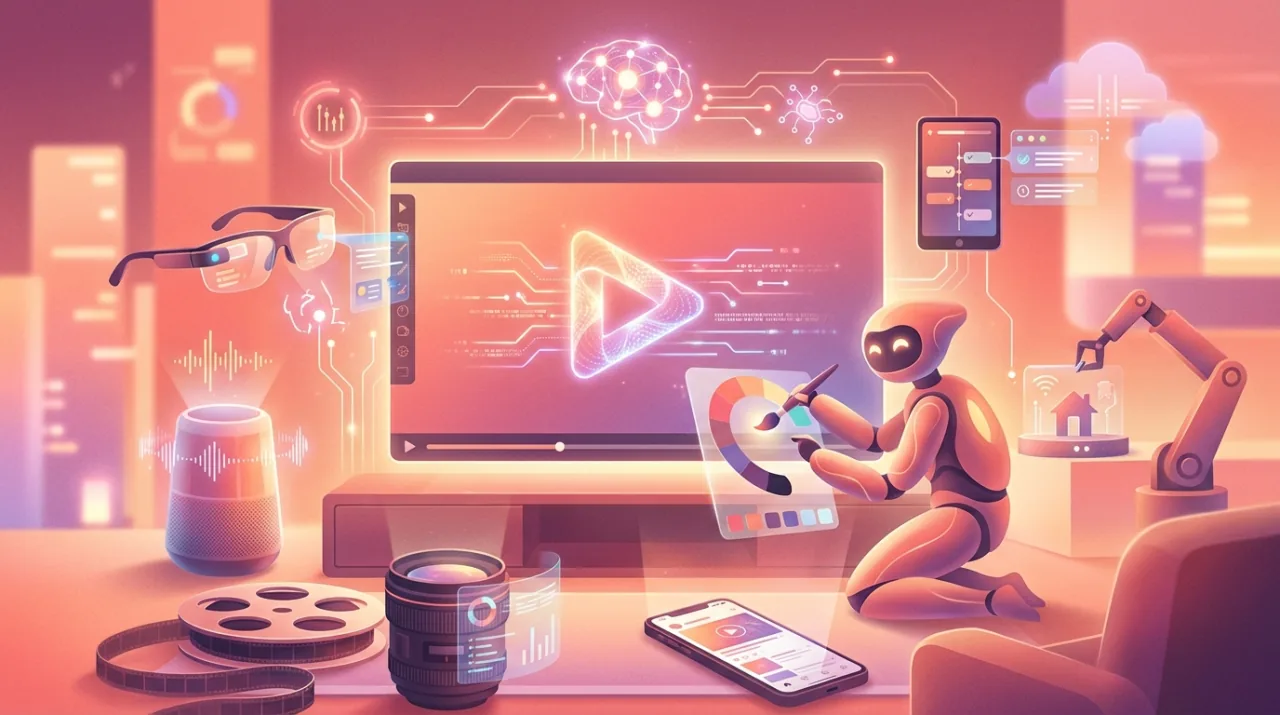
The landscape of consumer technology is perpetually shifting, but rarely does it undergo a transformation as profound and pivotal as the one heralded by the advent of autonomous AI agents. As insightfully detailed in the "2026 Marketing Trends: AI" report from Hangryfeed Insights, published on March 21, 2026, we are witnessing a fundamental redefinition of how artificial intelligence interacts with, understands, and serves the individual. This landmark analysis, a US-centric perspective on the most critical developments in the field, positions autonomous AI agents not merely as tools for efficiency but as independent entities capable of orchestrating complex consumer interactions with unprecedented intelligence and foresight.
The Hangryfeed Insights article highlights a crucial evolution: AI's transition from reactive problem-solving mechanisms to proactive, context-aware agents that grasp user intent and manage tasks independently. This represents a monumental leap, marking 2026 as a pivotal year for consumer AI. The promise is clear—enhanced user experiences driven by hyper-personalization, seamless integration into daily consumer touchpoints, and a significant acceleration of AI adoption within the US marketing landscape. These agents are designed to handle everything from intricate personalized marketing campaigns to sophisticated customer service inquiries, promising a future where digital interactions are not just responsive but anticipatory, intuitive, and deeply personalized.
Decoding "2026 Marketing Trends: AI": The Dawn of Autonomous AI Agents
The core premise of the Hangryfeed Insights report is that AI is transcending its traditional role. For years, AI applications in the consumer sphere primarily focused on automating repetitive tasks, enhancing data analysis, or providing quick, rule-based responses. While effective, these systems often lacked the capacity for true autonomy, requiring human oversight or explicit commands to function. The shift described in the 2026 report is towards autonomous agents—AI systems that can independently understand, reason, plan, and execute actions on behalf of the consumer or business.
This move from efficiency tool to independent operator is what defines the "pivotal shift" in 2026 consumer AI. Imagine an AI that doesn't just recommend products based on past purchases but proactively manages your entire shopping list, considering your dietary preferences, upcoming events, and even real-time promotions across multiple retailers. This level of comprehensive, proactive engagement is the hallmark of the new era of agentic AI.
The report emphasizes the vast potential of these agents to manage complex tasks. In personalized marketing, this means AI agents move beyond simple demographic targeting to craft individualized customer journeys that adapt in real-time based on subtle cues and evolving preferences. For customer service, it signifies a transition from static FAQs or basic chatbots to highly sophisticated agents that can resolve multi-faceted issues, offer proactive solutions, and even anticipate future needs, all without direct human intervention. The net result is a dramatically enhanced user experience, characterized by proactive, context-aware assistance that feels less like interacting with a machine and more like engaging with a highly competent, dedicated personal assistant.
Key insights from Hangryfeed Insights underscore several critical dimensions of this transformation:
- Integration into daily consumer touchpoints: Autonomous AI agents are not confined to specific apps or websites; they are seamlessly weaving themselves into the fabric of everyday digital and physical interactions, from smart home devices to e-commerce platforms and even public services.
- Driving hyper-personalization: The ability of agents to gather, process, and act upon vast amounts of individual data in real-time fuels an unprecedented level of hyper-personalization, making every interaction uniquely relevant to the consumer.
- Accelerating adoption in US marketing: The report specifically highlights the rapid embrace of these technologies within the US marketing sector, positioning autonomous AI as a transformative trend that is quickly moving from theoretical potential to practical implementation as tech maturation accelerates.
From Prediction to Reality: The Progress of AI Agents (As of March 2026)
While "2026 Marketing Trends: AI" provided a forward-looking blueprint, the reality as of March 23, 2026, shows consistent and accelerating progress towards the vision of agentic AI. Early real-world integrations are already demonstrating the practical implications of these advanced systems, laying the groundwork for even broader ubiquity. This progress prioritizes proactive personalization across various sectors, reflecting a concerted effort to move beyond reactive AI systems.
Revolutionizing Retail: AI-Powered Personalization and Predictive Shopping
One of the most tangible areas of progress is in retail. The traditional retail chatbot, once a rudimentary tool for answering basic questions or directing users to FAQs, has evolved dramatically. Modern retail chatbots are now profoundly context-aware, demonstrating an impressive ability to recall past interactions, understand individual preferences, and even anticipate future needs.
This context-awareness is powered by sophisticated predictive analytics. When a consumer engages with a retail chatbot, the system can access their purchase history, browsing patterns, wish lists, and even external data points like local weather or recent news, to offer truly personalized shopping assistance. For instance, a chatbot might remind a customer about an item they viewed weeks ago, cross-reference it with their calendar to suggest it for an upcoming event, and even apply a personalized discount code, all in a single, fluid interaction. This proactive approach significantly enhances the shopping journey, making it feel less transactional and more like a tailored concierge service.
Beyond recommendations, these advanced agents are also adept at assisting transactions. They can guide customers through complex configuration options, facilitate secure payments directly within the chat interface, manage returns or exchanges, and even track shipping updates autonomously. The frictionless nature of these interactions significantly boosts customer satisfaction and loyalty.
The National Retail Federation (NRF) had forecast a 25% shopper adoption rate for these advanced retail AI agents, and early data suggests this adoption is maturing gradually but consistently. Consumers are increasingly comfortable interacting with AI for routine purchases and information gathering, and as the capabilities of these agents expand, so too does their integration into the daily shopping habits of Americans. The journey from initial awareness to full-fledged reliance on AI for shopping assistance is well underway, redefining the competitive landscape for retailers across the US.
Intelligent Living: The Rise of Home Agents and Smart Ecosystems
The home environment is another fertile ground for the advancement of autonomous AI agents, moving beyond simple voice commands to truly intelligent, anticipatory systems. Home agents are transforming smart appliances and digital assistants into proactive partners in managing household affairs.
Consider the modern smart refrigerator, a prime example of an appliance integrated with an autonomous agent. These refrigerators no longer just keep food cold; they actively track inventory, recognizing when specific items are running low. More impressively, they can suggest recipes based on available ingredients, catering to dietary restrictions or preferences, and seamlessly enable auto-reordering of staples through subscription services or preferred online grocers. This is not merely automation; it's a proactive management system that reduces cognitive load for the homeowner, ensuring a consistently stocked pantry and fresh meal ideas.
Similarly, established digital assistants like Alexa and Google are gaining significant autonomy. While still responding to voice commands, they are increasingly capable of independent actions, such as detecting low stock of frequently used household items (e.g., paper towels, coffee) and adding them to a shopping list without explicit prompting. They can manage complex schedules, anticipate needs for upcoming events, and even coordinate across multiple smart devices to optimize energy consumption or maintain ideal home environments. This gradual increase in autonomy is paving the way for a future of ambient intelligence, where the home proactively supports its inhabitants with minimal direct intervention.
The foundational groundwork for super agents and ambient intelligence—a state where technology seamlessly and invisibly supports every aspect of daily life—is being laid through these multi-agent systems. While full ubiquity remains emergent, the early integrations in smart homes demonstrate a clear trajectory towards environments where AI anticipates and fulfills needs across retail, home management, and personal productivity.
Reshaping the Digital Landscape: AI Agents in Marketing and Search
Perhaps no sector is experiencing a more radical transformation due to autonomous AI agents than marketing and search. The traditional model of consumers posing queries and receiving static results is giving way to a dynamic, action-oriented paradigm. With AI agents, search is evolving from providing information to enabling direct action. Instead of merely searching for "best Italian restaurants near me," an AI agent can, upon understanding intent, proactively book a reservation, suggest a specific dish based on past preferences, and even arrange transportation.
The impact on consumer behavior is already significant, particularly within the US. A staggering 58% of US consumers are now reportedly using AI for purchases. This isn't just about discovery; it's about AI facilitating the entire purchasing journey, from initial research to final transaction. This high adoption rate underscores the convenience and value consumers are finding in these AI-driven interactions.
Marketers are rapidly adapting to this shift, particularly in optimizing for answer engines. With AI agents increasingly providing direct answers and executing actions, businesses must ensure their content is structured and discoverable in a way that AI can understand and utilize. This involves crafting concise, fact-based content that can be easily parsed by AI, and focusing on conversational SEO to cater to agent-led interactions. The goal is to be the authoritative source that an AI agent references or recommends. Early adopters focusing on AI-agent optimization are already seeing impressive results, boosting conversions by as much as 2.1 times. This demonstrates the tangible ROI of aligning marketing strategies with the capabilities of autonomous AI.
Furthermore, AI agents are proving invaluable for businesses in monitoring their brand presence and competitive landscape. Tools leveraging these agents can track AI mentions across various platforms, understanding how their brand is being perceived, discussed, and recommended by autonomous systems. This insight allows for agile adjustments to marketing campaigns and brand messaging, ensuring optimal positioning in the age of agentic search and recommendation.
Understanding Agentic AI: The Mechanics of Autonomy
At the heart of these transformations lies the concept of agentic AI. But what precisely distinguishes agentic AI from earlier forms of artificial intelligence? It's fundamentally about proactive autonomy, goal-orientation, and the ability to reason sequentially to achieve complex objectives.
Traditional AI often operates on a reactive model: an input is provided, the AI processes it based on predefined rules or learned patterns, and an output is generated. Think of a simple chatbot that responds to keywords, or a recommendation engine that suggests products based purely on collaborative filtering. These systems are powerful but lack the ability to initiate actions, adapt to unforeseen circumstances without explicit programming, or maintain a long-term understanding of context beyond the immediate interaction.
Agentic AI, by contrast, is designed to be:
- Proactive: It doesn't wait for a command; it anticipates needs and initiates actions. This involves sophisticated predictive modeling and an understanding of user goals.
- Goal-Oriented: An agentic AI is given a high-level goal (e.g., "plan a vacation," "manage my household inventory") and then breaks it down into sub-goals, identifying the necessary steps and resources to achieve them.
- Context-Aware: It maintains a persistent memory of past interactions, preferences, and environmental factors, allowing it to adapt its behavior and decisions based on a rich, evolving understanding of the situation.
- Capable of Sequential Reasoning: Agentic AI can plan a series of actions, evaluate the outcomes of each step, and adjust its plan dynamically. This enables it to handle tasks that require multiple stages and complex decision-making.
- Self-Improving: Through continuous learning from its interactions and the environment, agentic AI refines its strategies and knowledge base, becoming more effective and personalized over time.
The underlying technologies enabling this shift include advanced natural language understanding (NLU) and generation (NLG), sophisticated machine learning algorithms for predictive analytics, reinforcement learning for optimal decision-making, and robust integration capabilities that allow agents to interact with a multitude of digital services and physical devices. This combination empowers AI to move from mere processing to true independent action and intelligence.
Hyper-Personalization at Scale: The AI Agent's Transformative Impact
The ultimate superpower of the autonomous AI agent, and arguably its most significant contribution to the consumer experience, is its ability to deliver hyper-personalization at scale. This isn't just about addressing a customer by name or recommending items loosely related to past purchases. Hyper-personalization, driven by AI agents, is about crafting an individualized digital twin of the customer's preferences, behaviors, and evolving needs, and then proactively tailoring every interaction to that unique profile.
Across various consumer touchpoints, the impact is profound:
- Individualized Product Recommendations: Beyond "customers who bought this also bought...", AI agents create bespoke product discovery journeys. They consider not just purchase history but also browsing patterns, social media activity (with consent), lifestyle choices, stated preferences, and even emotional responses inferred from interactions. This leads to recommendations that feel incredibly relevant, often anticipating desires before they are consciously articulated.
- Tailored Content Delivery: Whether it's news feeds, streaming service suggestions, or educational content, AI agents curate information streams precisely to individual interests and learning styles. This ensures users are exposed to content that truly resonates, increasing engagement and satisfaction.
- Proactive Service and Support: Instead of waiting for a customer to report an issue, an AI agent might proactively alert them to a potential problem (e.g., a flight delay, a service outage impacting their smart home device) and offer solutions before the customer even becomes aware of the issue. This level of anticipatory service builds immense trust and loyalty.
- Dynamic Pricing and Offers: AI agents can present dynamic pricing or personalized promotions based on individual purchasing propensity, loyalty status, and even real-time market conditions, ensuring that offers are not only enticing but also maximally effective.
The benefits extend to both consumers and businesses. For consumers, it means unparalleled convenience, relevance, and a sense of being truly understood and catered to. The friction often associated with digital interactions is significantly reduced, replaced by seamless, intuitive experiences. For businesses, hyper-personalization translates into higher engagement rates, increased conversion rates, stronger customer loyalty, and ultimately, enhanced profitability. It transforms the customer relationship from a transactional one to a deeply empathetic and value-driven partnership.
Strategic Implications for US Businesses and Consumers
The rapid evolution of autonomous AI agents carries significant strategic implications, particularly for businesses operating within the US market and for American consumers themselves. US companies are at the forefront of this adoption curve, driven by competitive pressures and a consumer base that is increasingly digitally native and open to innovative technologies.
For businesses, adapting to this new reality means:
- Reimagining the Customer Journey: Companies must map out their customer journeys through the lens of AI agents, identifying where agents can augment or entirely take over interactions to optimize for personalization and efficiency. This requires a shift from human-centric design to agent-centric design principles.
- Investing in Data Infrastructure: The efficacy of AI agents is directly proportional to the quality and accessibility of data. US businesses are increasingly investing in robust data lakes, real-time analytics platforms, and ethical data governance frameworks to feed their autonomous systems.
- Developing Agent-First Marketing Strategies: As outlined earlier, optimizing for answer engines and understanding how AI agents recommend products and services becomes paramount. This may involve new forms of content creation, semantic SEO, and partnerships with AI platform providers.
- Cultivating AI Literacy within the Workforce: Training employees to understand, manage, and collaborate with AI agents is crucial. The future workforce will operate in hybrid teams of humans and AI, requiring new skills in prompt engineering, AI supervision, and ethical oversight.
Consumer expectations are also undergoing a profound shift. The bar for digital convenience and personalization has been raised significantly. American consumers now expect seamless, proactive service, intelligent recommendations, and a high degree of personalization across all their digital touchpoints. Businesses that fail to meet these evolving expectations risk falling behind competitors who embrace autonomous AI. This creates a powerful competitive advantage for early and effective adopters, allowing them to capture market share and foster stronger customer relationships.
The Road Ahead: Super Agents, Ambient Intelligence, and the Future of Consumer AI
The progress witnessed by March 2026 is merely the beginning of a much larger trajectory. The "broader trajectory" points towards a future dominated by super agents and ubiquitous ambient intelligence. What does this future entail?
Super agents are envisioned as highly sophisticated autonomous AI systems capable of coordinating with other agents and systems to achieve even more complex, multi-domain goals. Imagine a single super agent managing your entire digital life: coordinating your work schedule, personal appointments, health monitoring, financial planning, travel arrangements, and home automation, all while learning your preferences and adapting to unforeseen circumstances. These agents would operate as highly intelligent orchestrators, seamlessly integrating information and actions across every aspect of your existence.
The concept of ambient intelligence takes this a step further, describing a world where technology is so deeply embedded in our environment that it becomes invisible, yet constantly and proactively supportive. In an ambient intelligence future, your home, car, workplace, and even public spaces would be intelligently aware of your presence, needs, and preferences, adapting to provide seamless, anticipatory assistance without requiring explicit commands. The lights adjust to your mood, your car pre-routes based on traffic and your calendar, your office prepares for your arrival, and your devices proactively manage your wellbeing.
The foundations for this future are already being laid through the development of multi-agent systems. These are environments where multiple specialized AI agents collaborate to achieve a common goal. For instance, a retail multi-agent system might involve a shopping agent, a logistics agent, a customer service agent, and a payment agent, all working in concert to deliver a seamless e-commerce experience. As these systems become more sophisticated and interconnected, they will pave the way for the emergence of super agents capable of operating across vastly different domains.
While the full ubiquity of super agents and ambient intelligence remains emergent, the pace of technological advancement suggests that this future is not a distant dream but a rapidly approaching reality. The breakthroughs in multi-agent collaboration, contextual reasoning, and proactive decision-making are continuously pushing the boundaries of what consumer AI can achieve, promising a truly seamless, anticipatory, and hyper-personalized digital existence.
Navigating the New Era: Challenges and Ethical Considerations
The transformative potential of autonomous AI agents is undeniable, but their widespread adoption also introduces a range of challenges and ethical considerations that must be proactively addressed. As these systems become more integrated into the fabric of daily life, issues related to data privacy, trust, transparency, and potential biases become paramount.
Data Privacy Concerns: Autonomous AI agents thrive on data – vast quantities of personal information about preferences, behaviors, and even biometric cues. This raises significant privacy concerns. How is this data collected, stored, and utilized? Who owns it, and how can consumers maintain control over their digital footprint when agents are constantly gathering and acting upon information? Robust data protection regulations, akin to GDPR or evolving US state-level privacy laws, will be crucial, along with clear consent mechanisms and auditable data trails.
Trust and Transparency: For consumers to fully embrace autonomous agents, they must trust these systems implicitly. This trust is built on transparency: understanding how an agent makes decisions, why it recommends certain actions, and what data it is using. If an agent makes a mistake, who is accountable? The "black box" nature of some advanced AI models can undermine trust, necessitating advancements in explainable AI (XAI) to provide clarity into agent behavior.
Ethical AI and Bias: AI agents are trained on massive datasets, and if these datasets contain inherent biases (e.g., reflecting societal inequalities, gender stereotypes, or racial prejudices), the agents will perpetuate and even amplify those biases in their actions and recommendations. This could lead to unfair or discriminatory outcomes in areas like credit assessment, job recommendations, or even personalized marketing. Developing ethical AI frameworks, implementing rigorous bias detection and mitigation strategies, and ensuring diverse teams in AI development are critical to building equitable autonomous systems.
The Evolving Regulatory Landscape: Governments and regulatory bodies are playing catch-up with the rapid advancements in AI. New laws and policies will be needed to govern the behavior of autonomous agents, address liability in case of errors, protect consumer rights, and ensure fair competition. A collaborative approach between industry, academia, and government will be essential to foster innovation while safeguarding societal well-being.
Job Displacement and Workforce Adaptation: While AI agents create new jobs, they also have the potential to automate tasks traditionally performed by humans, leading to concerns about job displacement. Proactive measures in education, retraining, and social safety nets will be vital to manage this transition and ensure that the benefits of AI are broadly shared across society.
Addressing these challenges is not merely a technical exercise but a societal imperative. The responsible development and deployment of autonomous AI agents will determine whether this transformative technology fulfills its promise of enhancing human life or introduces new complexities and ethical dilemmas.
Conclusion: Embracing the Autonomous AI Agent Revolution
The "2026 Marketing Trends: AI" report from Hangryfeed Insights serves as a powerful testament to a pivotal moment in consumer technology. As of March 2026, the era of autonomous AI agents is not a futuristic concept but a burgeoning reality, fundamentally reshaping how consumers interact with the digital world and how businesses engage with their customer base. From the context-aware retail chatbots that recall our shopping histories to the intelligent home agents managing our inventory and the sophisticated marketing AI that processes actions over mere queries, the trajectory towards agentic AI is clear and accelerating, particularly within the US market.
These autonomous systems promise an unprecedented level of hyper-personalization, delivering enhanced user experiences through proactive, context-aware assistance that anticipates needs and streamlines complex tasks. The progress observed in retail, smart homes, and digital marketing—with impressive adoption rates and conversion boosts—validates the transformative potential identified by Hangryfeed Insights. While the journey towards ubiquitous "super agents" and ambient intelligence is still emergent, the foundations are being robustly laid through multi-agent systems and continuous innovation.
As US businesses and consumers navigate this new era, the strategic implications are profound. Embracing autonomous AI agents means not just adapting to new tools but fundamentally reimagining marketing strategies, customer service paradigms, and even the very fabric of daily life. While challenges related to privacy, ethics, and workforce adaptation demand diligent attention, the overarching narrative is one of immense promise. The revolution of autonomous AI agents is poised to unlock new levels of convenience, efficiency, and personalized engagement, heralding a future where technology truly understands and serves the individual with unparalleled intelligence and foresight. The future of consumer AI is here, and it is autonomously intelligent.