
AI Agents Redefine Consumer Interaction: From Passive Answers to Real-World Action
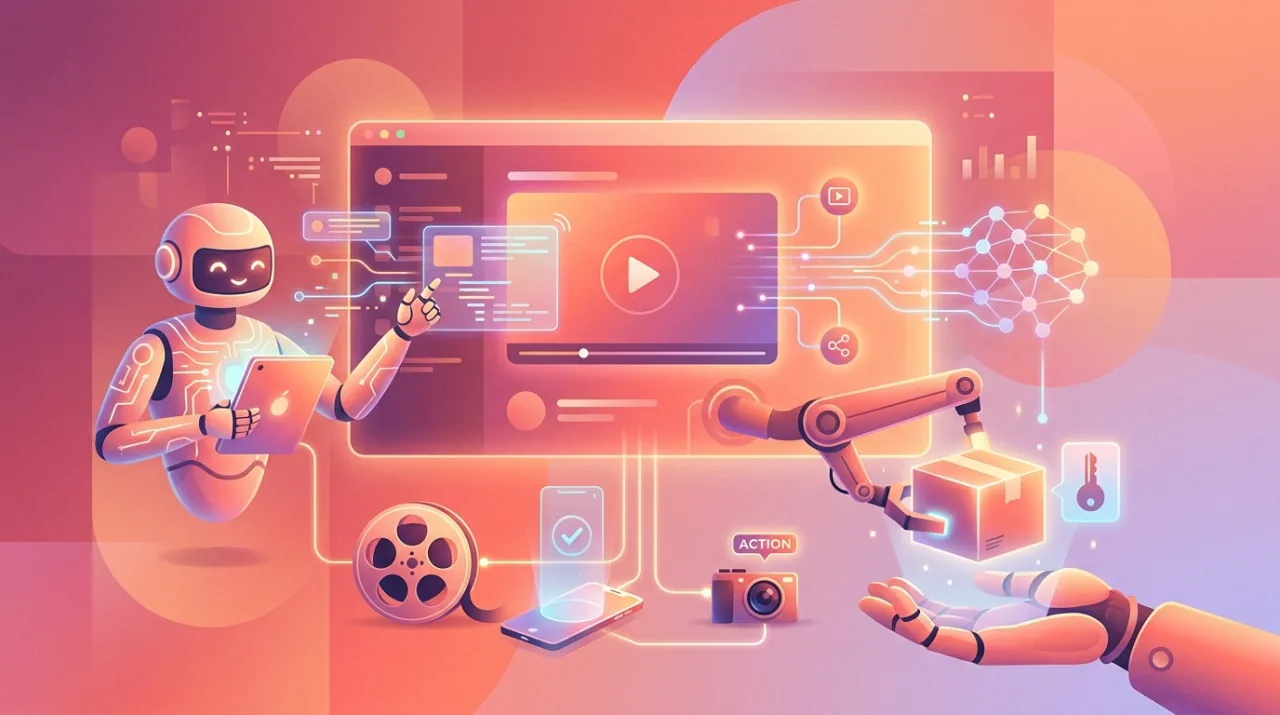
The landscape of artificial intelligence for consumers in the United States has undergone a transformative shift, marking a pivotal moment that redefines the very essence of human-AI interaction. What was once largely a realm of passive information retrieval and text generation has decisively crossed into active, real-world execution. This profound evolution, largely catalyzed by a series of strategic integrations and platform advancements announced around August 20, 2026, has ushered in an era where AI agents are no longer merely "answering" our queries but are now actively taking actions for consumers in the real world, including managing finances and orchestrating communications. This isn't a theoretical leap; it's a practical reality now accessible to mainstream US consumers, fundamentally altering their digital lives.
This monumental pivot, extensively analyzed in an August 22 piece titled “AI agents cross from answering to acting on your behalf,” highlights a dramatic progression from AI as a tool for suggestion to AI as a genuine digital delegate. The implications for everyday life are vast, promising unprecedented levels of automation, convenience, and efficiency, while simultaneously introducing new considerations regarding security, control, and ethical deployment. The story is distinctly US-centric, focusing on how consumers with access to major platforms like Binance, Anthropic’s Claude, and Apple devices can now leverage these sophisticated AI agents to handle high-stakes operations that were previously the exclusive domain of human input.
The Dawn of Action-Oriented AI Agents: A Post-August 20, 2026 Reality
The core of this revolution lies in the ability of consumer-facing AI agents to trade real money, operate a web browser, utilize files and skills, and send text messages using a user’s own accounts and credentials. This marks an undeniable shift from rudimentary, passive chatbots to highly capable, active digital delegates that possess the authority and technical means to influence real-world outcomes. The confluence of three distinct, yet interconnected, developments underpins this seismic change, each opening up a new frontier for AI automation in the daily lives of US consumers.
Binance Agent OS: AI Agents Enter the Financial Arena
Perhaps the most audacious and impactful development is the launch of Binance Agent OS. This innovative developer platform and server has opened direct financial rails to AI applications, allowing models like Anthropic’s Claude, OpenAI’s ChatGPT, and Cursor to interface directly with Binance’s extensive trading, wallet, payments, and on-chain infrastructure. The introduction of Binance Agent OS is a game-changer because it means an AI agent can, with appropriately configured user-granted access, autonomously execute trades, move funds, and interact with crypto wallets in direct response to user goals.
For US consumers, this translates into a powerful new paradigm for personal finance management and investment. Imagine an AI agent configured to monitor market conditions, execute pre-defined trading strategies, rebalance a crypto portfolio based on real-time data, or even manage recurring payments and transfers – all with minimal human intervention. The potential for automating complex financial tasks, optimizing investment returns, and simplifying cryptocurrency engagement is immense. A busy professional could delegate the intricate process of yield farming or rebalancing across various DeFi protocols to an AI agent, freeing up valuable time and potentially enhancing financial performance. This capability moves far beyond simple financial advice; it enables direct, programmatic interaction with the user's actual money and assets.
However, the sheer power of this integration also necessitates robust safeguards. Binance Agent OS is designed with configurable permissions and a crucial emergency-stop control. These features are not mere afterthoughts; they are foundational pillars for responsible deployment. The ability for users to precisely define the scope of their AI agent’s financial actions – from read-only access to specific trading limits – is paramount. The emergency-stop mechanism provides a critical fail-safe, allowing users to immediately halt any automated financial activity if unforeseen issues arise or if the agent deviates from its intended purpose. This blend of powerful automation with granular control is essential for building trust and ensuring the safe adoption of AI agents in high-stakes financial environments. The implications for mainstream US consumers extend to new levels of financial accessibility and sophisticated portfolio management previously reserved for institutional investors, albeit with the inherent risks of market volatility and the absolute necessity of rigorous security practices.
Anthropic’s Computer Use, Browser, Skills, and Files: The Digital Delegate for Daily Tasks
Complementing Binance’s financial inroads, Anthropic has significantly expanded the capabilities of its Claude platform by making its "computer-use" capability generally available. This update is not merely an incremental improvement; it signifies a massive leap in an AI agent's ability to interact with the digital world on a user's behalf. Alongside this, Anthropic has rolled out a browser tool plus Skills and Files APIs, empowering AI agents to control a computer session, browse the web, run workflow “skills,” and manage documents as part of long-running tasks.
This suite of tools fundamentally transforms Claude from a sophisticated chatbot into a versatile digital delegate. For US consumers, this means an AI agent can now perform a multitude of online tasks that traditionally required manual human input. Consider scenarios where an AI agent can:
- Fill forms: Automatically navigate to a website, populate complex application forms, or process online registrations using stored user data.
- Navigate sites: Research information across multiple websites, compare product prices, book travel arrangements, or manage online subscriptions by directly interacting with web interfaces.
- Manipulate files: Access, read, summarize, edit, and organize documents stored locally or in cloud drives, integrate information across different file types, or prepare reports based on user instructions.
- Run workflow "skills": Execute predefined sequences of actions, such as automatically generating a summary of recent emails, extracting key data from a PDF, uploading it to a specific online portal, and then notifying relevant contacts.
This capability moves beyond merely suggesting what to click or providing links. Instead, the AI agent actively performs these actions, interacting with the digital environment much like a human user would, but with unparalleled speed and precision. This opens up vast opportunities for enhanced productivity, streamlined administrative tasks, and personalized online experiences. Imagine an AI agent that can plan an entire vacation, from researching flights and hotels to booking reservations and managing itineraries, all by operating directly within various travel websites and services. The ability for these AI agents to handle long-running tasks is particularly crucial, allowing them to maintain context and execute multi-step processes over extended periods without constant human oversight, truly embodying the role of an intelligent assistant that proactively manages parts of a user's digital life.
OpenAI Wires ChatGPT into Apple Messages on Mac: Intelligent Communication Automation
The third major pillar of this transformation comes from OpenAI, which has deeply integrated ChatGPT with Apple Messages on supported Mac configurations. This integration allows the powerful language model to compose and send texts using the user’s own phone number and conversations, all subject to the credentials and guardrails configured by the user.
Practically, this development turns ChatGPT from a separate application or conversational interface into a live communications agent seamlessly embedded within one of the most widely used messaging platforms for US consumers. This capability unlocks a new level of automated communication, empowering AI agents to:
- Follow up with contacts: Remind friends about plans, send meeting follow-ups to colleagues, or check in with family members.
- Draft replies: Generate contextually appropriate and personalized responses to incoming messages, saving time and mental effort, especially in busy communication streams.
- Handle simple coordination: Manage scheduling conflicts, confirm appointments, or relay information to multiple recipients based on ongoing conversations.
The significance here is not just about generating text; it’s about context-aware, personalized communication delivered through a user's established channels and using their personal identity (phone number). This means the AI agent doesn't just draft a message; it sends it, taking the final step in the communication chain. For US consumers, this could mean less time spent on routine messaging tasks, improved responsiveness, and the ability to maintain communication flows even when busy. The potential for integrating personal and professional communication tasks, ensuring no message goes unanswered, or proactively managing social engagements, represents a significant step towards a truly ambient and proactive AI assistant. However, given the personal nature of messaging, the importance of user-configured guardrails and privacy considerations cannot be overstated. Users must have clear control over when and how their AI agent communicates on their behalf, ensuring authenticity and preventing unintended messages.
The New Safety Controls: Permissions and Emergency-Stop Mechanisms
The collective capabilities described above—acting in financial systems, operating browsers, and sending native messages—underscore a critical shift in how AI agents are designed and controlled. The article characterizes this as the moment when consumer AI agents move from information tools to execution agents. This move necessitates a fundamental rethinking of safety and control. Instead of relying on strict sandboxing, where agents are confined and cannot impact external systems, the new paradigm relies heavily on permission scopes and emergency-stop mechanisms.
Permission scopes are granular controls that allow users to define precisely what an AI agent can and cannot do. For instance, an agent might be granted permission to read emails but not send them, or to execute trades up to a certain dollar limit but not initiate withdrawals. This level of detail empowers US consumers to tailor the agent’s autonomy to their comfort level and the specific task at hand, mitigating potential risks associated with over-delegation. The explicit granting of access to user credentials for specific actions forms the backbone of this security model.
The emergency-stop mechanism, on the other hand, acts as the ultimate fail-safe. It provides an immediate override, allowing users to instantly halt all agent activities if an agent misbehaves, encounters an unexpected scenario, or if the user simply wishes to regain direct control. This is particularly vital when AI agents are handling high-stakes actions like money movement or sensitive communications. These safety controls are not just features; they are foundational requirements for fostering trust and ensuring the responsible deployment of AI agents that possess such significant capabilities to act on a user’s behalf in the real world.
A US-Centric Framing of a Global Evolution
While the platforms referenced (Binance, Anthropic, OpenAI, Apple) are global entities, the framing and implications of this story are distinctly US-centric. The focus is on how mainstream US consumers with access to these technologies are suddenly able to delegate real, high-stakes actions—be it trading cryptocurrencies, managing digital workflows, or handling personal communications—to software agents. This focus considers the particular regulatory environment, technological adoption rates, and cultural readiness within the United States. The widespread use of Apple devices, the increasing engagement with cryptocurrency, and the general propensity for adopting new consumer technologies within the US market make these developments particularly salient for the average American user. The narrative addresses the immediate practical impact on daily life for those in the US, rather than a generalized global perspective.
Progress of AI Agents as of Today (August 23, 2026)
As of late August 2026, the progress of AI agents extends beyond these specific integrations, reflecting a broader, accelerated evolution of the technology itself. The recent announcements serve as powerful exemplars of these larger trends, solidifying the move from passive AI to active digital delegates.
Tool-Rich, Action-Oriented Capabilities: A Holistic Advancement
The specific examples of Binance Agent OS, Anthropic’s computer use with browser and APIs, and the ChatGPT–Apple Messages integration collectively illustrate a profound shift: AI agents now operate across finance, web, and communications, directly using user credentials with configurable guardrails. This represents a substantial leap beyond earlier AI assistants that were largely confined to answering questions or generating text. The emphasis is now squarely on tool use, where AI models are not just language processors but orchestrators of external applications and real-world systems. This allows for a level of practical utility and embedded automation that was previously theoretical, making AI agents integral to executing complex, multi-faceted tasks that span various digital domains. This means for US consumers, the convenience isn't just in getting an answer, but in having the task completed.
Platform-Level Agent Infrastructure and Evaluation: Building Robustness
Beneath the surface of these consumer-facing applications lies a rapidly maturing ecosystem of platform-level agent infrastructure and sophisticated evaluation methodologies. Dedicated agent platforms and indexes, often accompanied by "agent leaderboards," are emerging to track and improve agent performance. Infrastructure efforts, such as OpenAI’s strategic acquisition of real-time database teams, are aimed at enhancing the underlying capabilities required for robust agent operation. The focus is on improving key areas like reliability, state management, and execution loops for agents handling longer, multi-step tasks.
Benchmarks for AI agents are evolving beyond simple model accuracy. They now specifically focus on tool use, memory, and multi-step task completion, recognizing that an agent's true value lies in its ability to effectively interact with external tools, retain context over extended periods, and successfully navigate complex workflows. This foundational work is crucial because it directly translates into more dependable, capable, and trustworthy AI agents for US consumers. A robust infrastructure ensures that agents can maintain continuous operation, recover from errors gracefully, and consistently achieve desired outcomes, even for intricate, delegated actions.
Enterprise-Grade, Long-Running Agents: Consumer Products in the Making
While not directly consumer-facing, the advancements in enterprise agent platforms provide a vital blueprint and demonstrate capabilities that are rapidly migrating into consumer products. Enterprise agents now support features that allow them to maintain state for days, use constrained “agent identity” credentials, and log every operation. These patterns are particularly relevant to future consumer applications.
Imagine a personal finance AI agent that continuously monitors your spending, manages your investments, and identifies savings opportunities over weeks, maintaining context throughout. Or a scheduling agent that orchestrates complex appointments with multiple parties across different time zones, keeping track of preferences and constraints for days. The enterprise focus on governance and auditability—where every action taken by an agent is logged and traceable—is crucial for building trust and accountability in consumer products, especially when AI agents are allowed to act on behalf of users in sensitive domains. This enterprise-level rigor sets a higher bar for the reliability and transparency that US consumers can expect from their future AI agents.
Increasing Integration with Everyday Apps and Ecosystems: The Ambient Agent
The ability of AI agents to use desktop browsers, messaging apps, and financial APIs is not an isolated phenomenon but rather indicative of a broader trend: a move toward ambient agents embedded in existing consumer workflows, rather than standalone chat windows. As these integrations deepen, a typical US consumer will increasingly encounter AI agents not as explicit interactions, but as background operators that seamlessly manage aspects of their digital lives.
This trend suggests a future where AI agents silently work behind the scenes: booking appointments based on calendar availability and preferences, handling shopping logistics from price comparison to checkout and delivery tracking, or managing subscriptions and billing without direct user prompts. The vision is for AI agents to become an invisible layer of intelligence, proactively anticipating needs and executing tasks to simplify and optimize daily routines. This seamless integration aims to reduce friction and cognitive load, making sophisticated AI automation an intuitive, almost imperceptible, part of the digital experience for US consumers.
Overall, as of August 23, 2026, AI agents have unequivocally moved from being answer-generating assistants to credential-holding actors that operate in key consumer domains: money, web, and messaging. This evolution is underpinned by a growing emphasis on permissions, logging, and emergency controls to responsibly manage the associated risks. The technological infrastructure is maturing, and the integrations with everyday applications are deepening, pointing towards a future where AI agents are indispensable digital delegates for US consumers.
Implications and The Road Ahead for US Consumers
The rapid advancement of AI agents from "answering" to "acting" carries profound implications for US consumers, ushering in an era of unprecedented convenience and efficiency, alongside new challenges and considerations.
Benefits for US Consumers:
- Enhanced Productivity and Time Savings: Delegating mundane, repetitive, or complex tasks frees up significant time, allowing individuals to focus on higher-value activities or leisure. From managing emails and scheduling to handling financial transactions and web research, AI agents become powerful multipliers of personal efficiency.
- Unprecedented Convenience and Personalization: AI agents can provide hyper-personalized services, anticipating needs and proactively acting on preferences. Imagine an agent that manages your travel plans, optimizes your spending, or curates information tailored specifically to your interests, all seamlessly integrated into your digital life.
- Accessibility and Empowerment: For individuals with disabilities or those facing time constraints, AI agents can democratize access to complex digital tasks, empowering a broader range of US consumers to navigate and interact with the digital world more effectively.
- Smarter Decision-Making: By processing vast amounts of data and executing predefined strategies (e.g., in finance or e-commerce), AI agents can potentially lead to more optimized outcomes than human-driven, intuitive decisions.
Challenges and Risks for US Consumers:
- Security Vulnerabilities: Granting AI agents access to user credentials and financial systems introduces new attack vectors. Robust encryption, multi-factor authentication, and constant vigilance against cyber threats become even more critical.
- Privacy Concerns: As AI agents become deeply embedded in personal communications and data management, safeguarding sensitive information and preventing unauthorized data sharing will be a paramount concern. Clear privacy policies and user controls are essential.
- Ethical Dilemmas and Bias: AI agents can perpetuate or amplify biases present in their training data or programming. Ensuring fairness, transparency, and accountability in their decision-making, especially when acting on behalf of users, will be a continuous challenge.
- Loss of Control and Automation Addiction: Over-reliance on AI agents could lead to a diminished sense of control over one's digital life and a potential deskilling in areas where agents take over. Users must maintain a critical awareness and oversight.
- The Learning Curve for Management: While designed for convenience, effectively configuring permissions, setting guardrails, and understanding the nuances of an AI agent’s capabilities will require a new form of digital literacy for US consumers.
- Economic Impact: While AI agents promise to boost productivity, their widespread adoption could also contribute to discussions around job displacement in certain sectors, necessitating societal adaptations and reskilling initiatives.
The Future of Delegation:
This shift fundamentally changes the human-computer interaction model. We are moving from direct command-and-control to a more sophisticated model of delegation and oversight. US consumers will increasingly become managers of their digital delegates, setting high-level goals and relying on the AI agents to autonomously figure out the detailed steps. This necessitates not just technological advancements, but also a cultural shift in how we interact with and trust technology. The development of "AI literacy"—the ability to understand, evaluate, and effectively manage AI agents—will become a crucial skill.
Regulatory Landscape:
Given the high-stakes nature of financial transactions and personal communications handled by AI agents, it is highly probable that the US regulatory landscape will evolve to address these new capabilities. This could involve new guidelines for data privacy, consumer protection, financial transparency, and accountability frameworks for autonomous systems. The balance between fostering innovation and ensuring public safety and ethical use will be a continuous dialogue.
Conclusion: The Age of Action-Oriented AI Agents Has Arrived
The developments unfolding around August 20, 2026, signify a monumental turning point in the trajectory of consumer AI for US consumers. The ability of AI agents to cross the chasm from merely "answering" to actively "taking actions" in the real world—from orchestrating financial transactions via Binance Agent OS, to navigating and manipulating the web with Anthropic's computer use capabilities, and seamlessly managing communications through OpenAI's integration with Apple Messages—marks the arrival of truly autonomous digital delegates.
This is not a distant future; it is the present reality, reshaping how US consumers interact with their money, their digital environments, and their social networks. These AI agents, empowered by user credentials and governed by sophisticated permissions and emergency-stop mechanisms, are poised to become indispensable extensions of our digital selves. As the underlying platform-level agent infrastructure continues to mature and integrations deepen across everyday apps, we are on the cusp of a world where intelligent automation is not an add-on, but an ambient, foundational layer of our daily existence. The journey into this new age of action-oriented AI agents promises unprecedented efficiency and convenience, while simultaneously demanding vigilance, thoughtful design, and an unwavering commitment to user control, security, and ethical deployment. The future of AI in the US is no longer about asking questions; it's about getting things done.


